
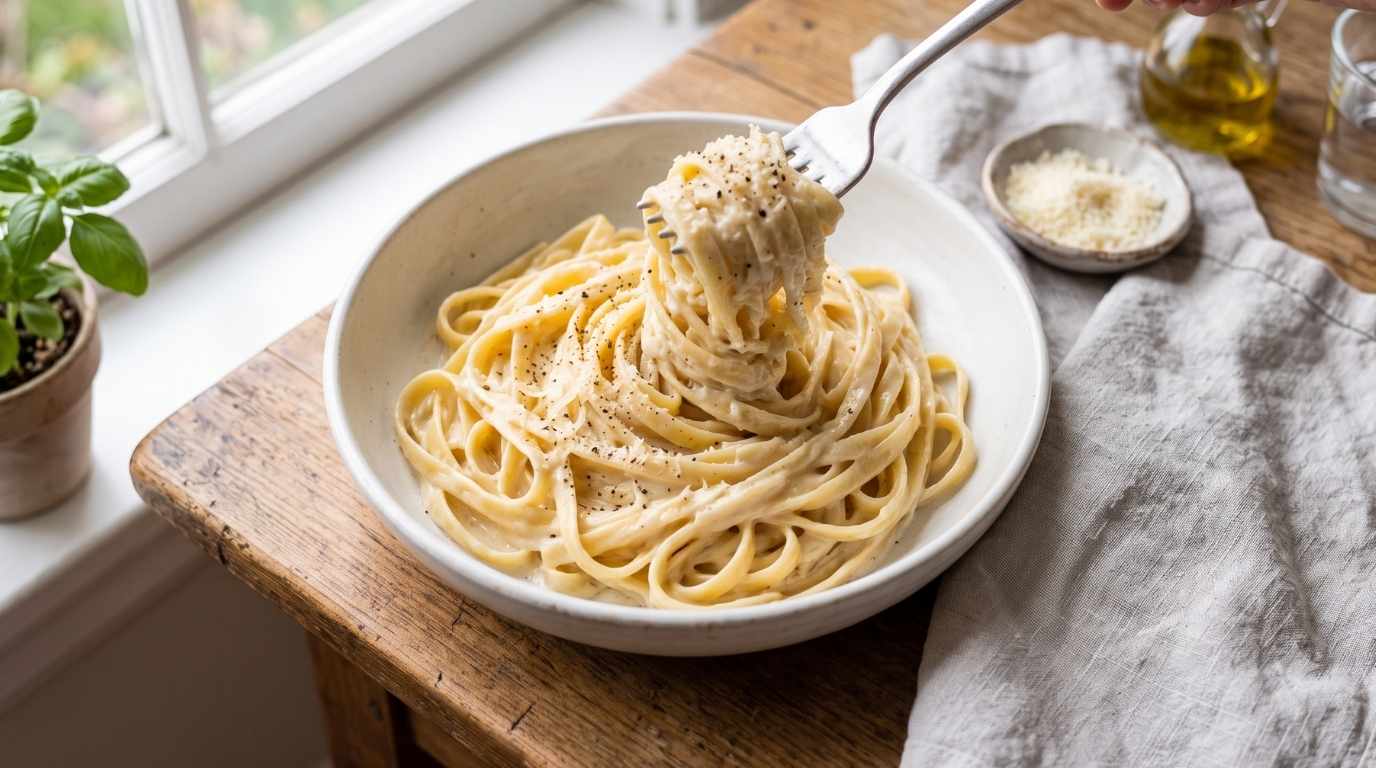
Most homemade alfredo sauce goes wrong in the same two ways: it turns grainy the second the cheese hits the pan, or it breaks into a greasy, separated mess before it ever reaches the pasta. Both problems come from rushing the process, not from a bad recipe.
Once you know how to make alfredo sauce the right way, with the right order of ingredients and the right heat, it comes out smooth and glossy every single time.
This guide walks you through exactly how to build a restaurant-style alfredo sauce from scratch using butter, cream, garlic, and fresh parmesan.
We’re going to melt, simmer, and whisk in a specific sequence that keeps the sauce from breaking, even if grainy or separated sauce has ruined dinner for you before.
The whole process takes about 20 minutes from start to finish, and none of it requires special equipment. Grate your cheese, grab a heavy pan, and let’s get this sauce silky.
1. Grate the Parmesan Fresh, Not Pre-Shredded
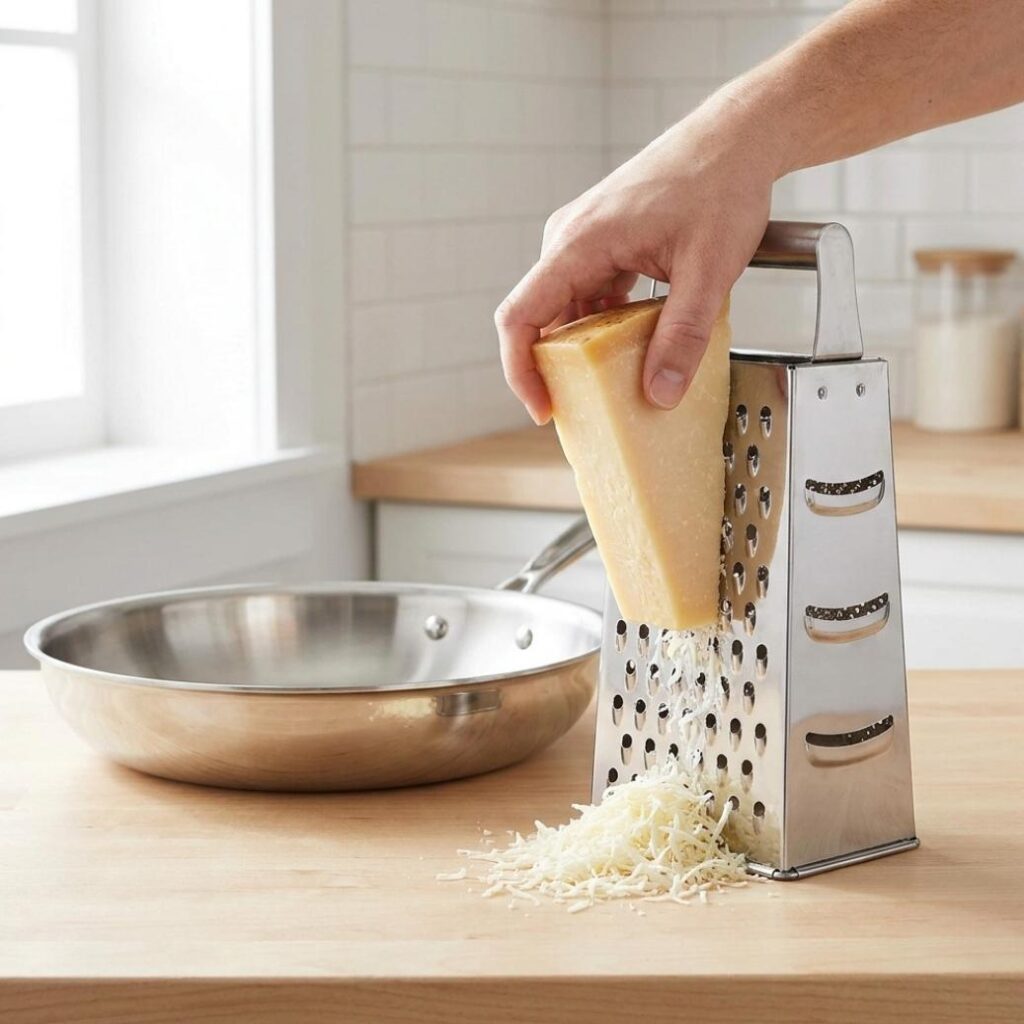
Pre-shredded cheese is coated in anti-caking powder, and that powder is the single biggest reason store-bought parmesan turns a sauce gritty instead of silky. Buy a wedge and grate about 1 1/2 cups on the fine side of a box grater. Let it sit out at room temperature while you start the sauce, cold cheese straight from the fridge seizes up faster once it hits warm cream, and seized cheese doesn’t smooth back out.
2. Melt the Butter Over Medium-Low Heat
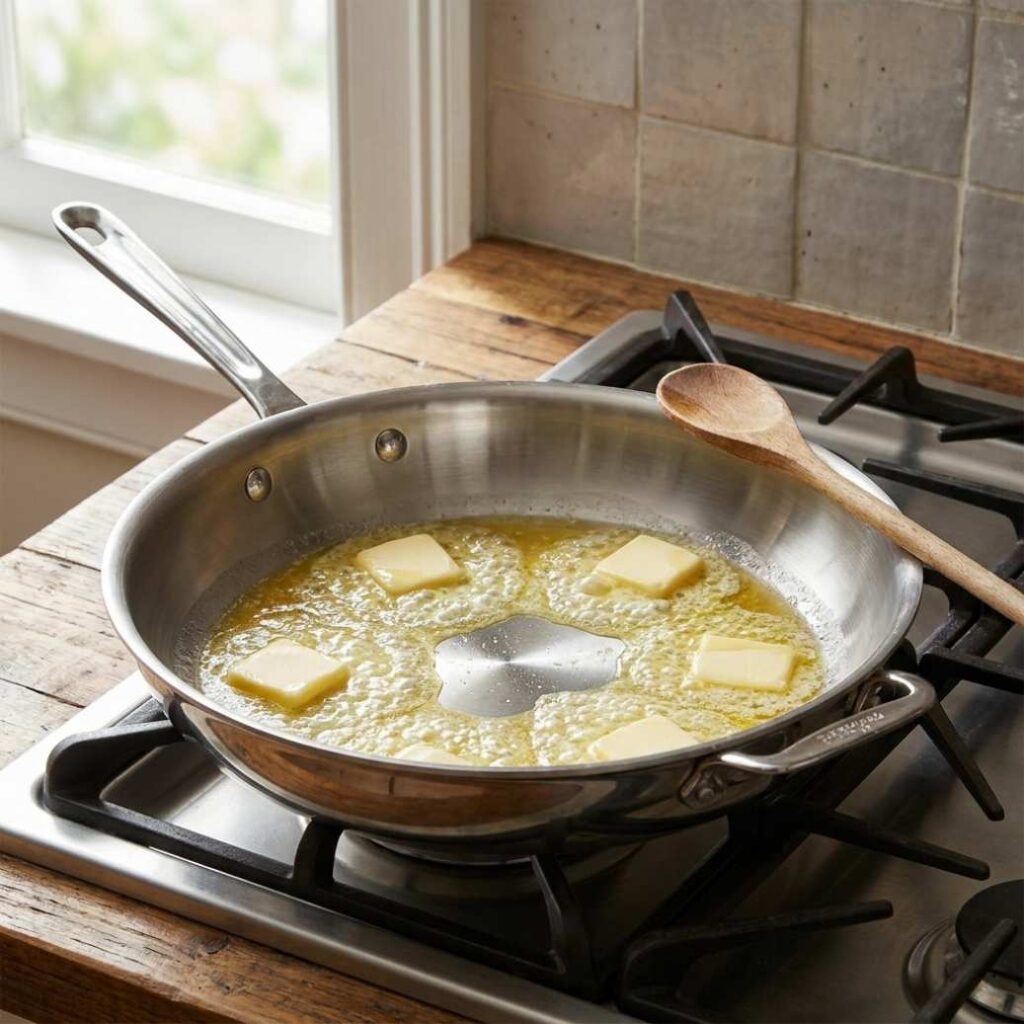
A heavy-bottomed saucepan holds heat evenly and won’t scorch the butter the moment you look away. Melt 1/2 cup unsalted butter over medium-low heat, swirling the pan occasionally instead of stirring. You’re not browning it here, just melting it fully before the garlic goes in.
3. Sauté the Garlic Until Fragrant
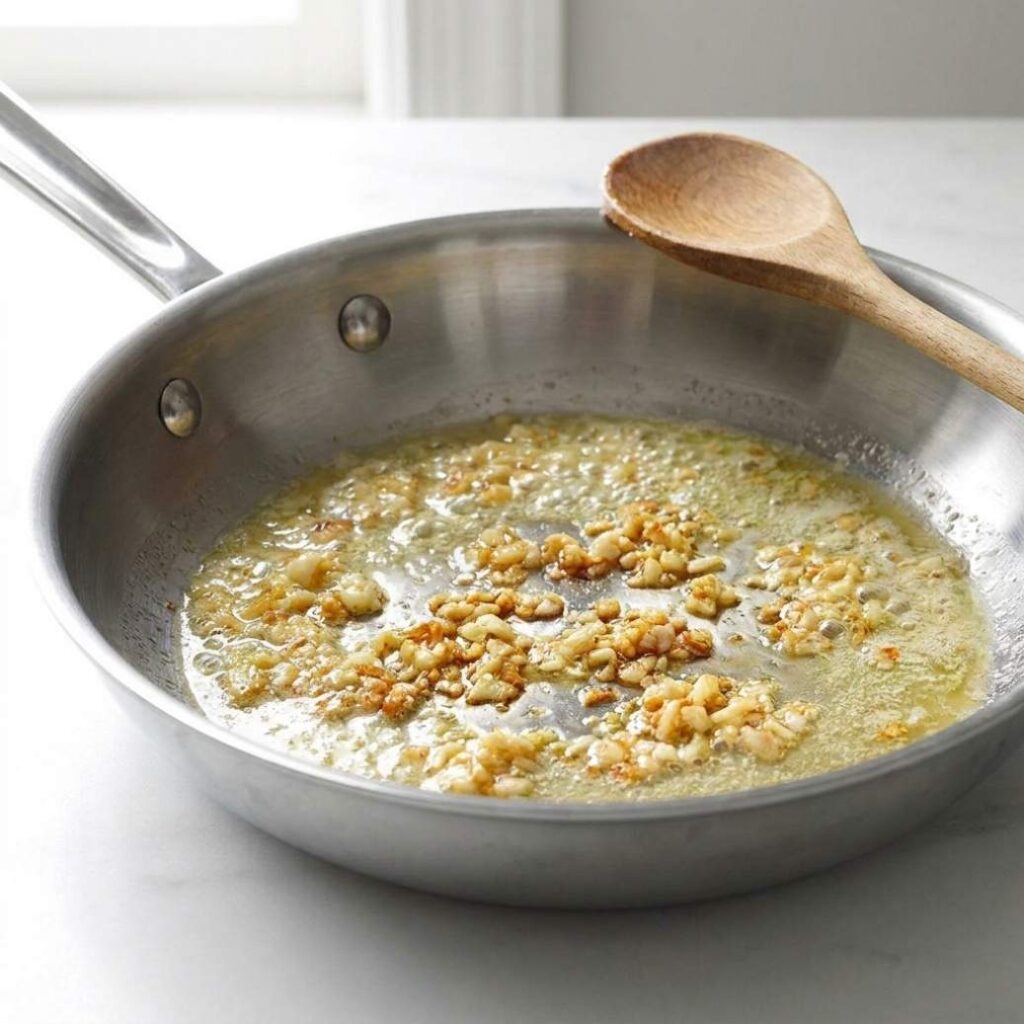
Add 3 cloves of minced garlic to the melted butter. Stir constantly for about 60 seconds, until it smells fragrant but hasn’t taken on any color.
4. Pour in the Heavy Cream Slowly
Once the garlic is fragrant, ease the heat down slightly before the cream goes in , pouring it into a pan that’s too hot causes it to seize and separate before it ever gets a chance to simmer smooth. Add 2 cups of heavy cream in a slow, steady stream, whisking constantly as you pour. The mixture will look thin and pale at first. That’s normal. It thickens later, once it simmers, not now.
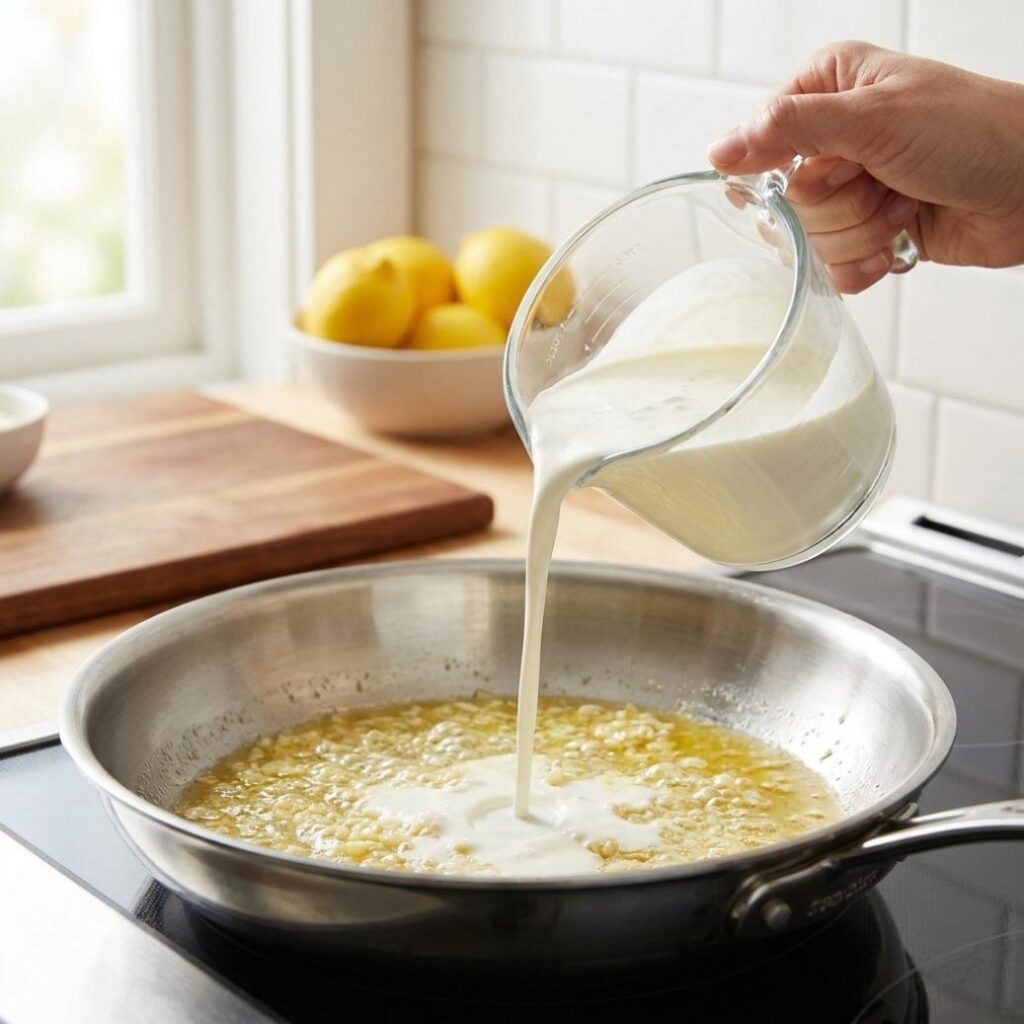
5. Simmer the Cream Until It Thickens
You’re watching for one specific sign: the sauce should coat the back of a spoon and hold a clean line when you drag a finger through it. Bring the cream to a gentle simmer, never a full boil, and let it reduce for 6 to 8 minutes, stirring occasionally so the bottom doesn’t scorch.
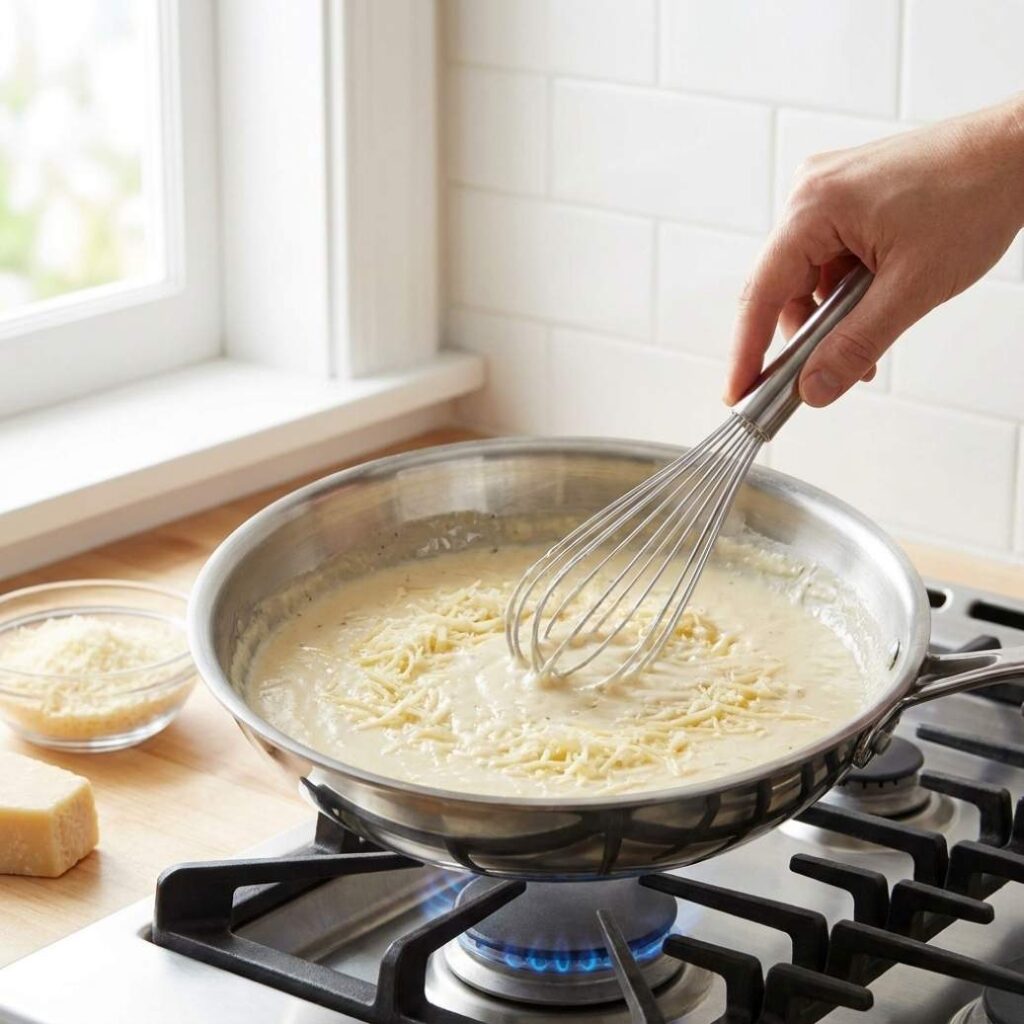
6. Whisk in the Parmesan Off the Heat
Pull the pan completely off the burner before the cheese goes anywhere near it. Add the 1 1/2 cups of grated Parmesan in three additions, whisking each one fully into the cream before adding the next. Residual heat from the pan melts it smoothly on its own. Direct heat isn’t needed here, and it’s exactly what turns a sauce grainy instead of silky.
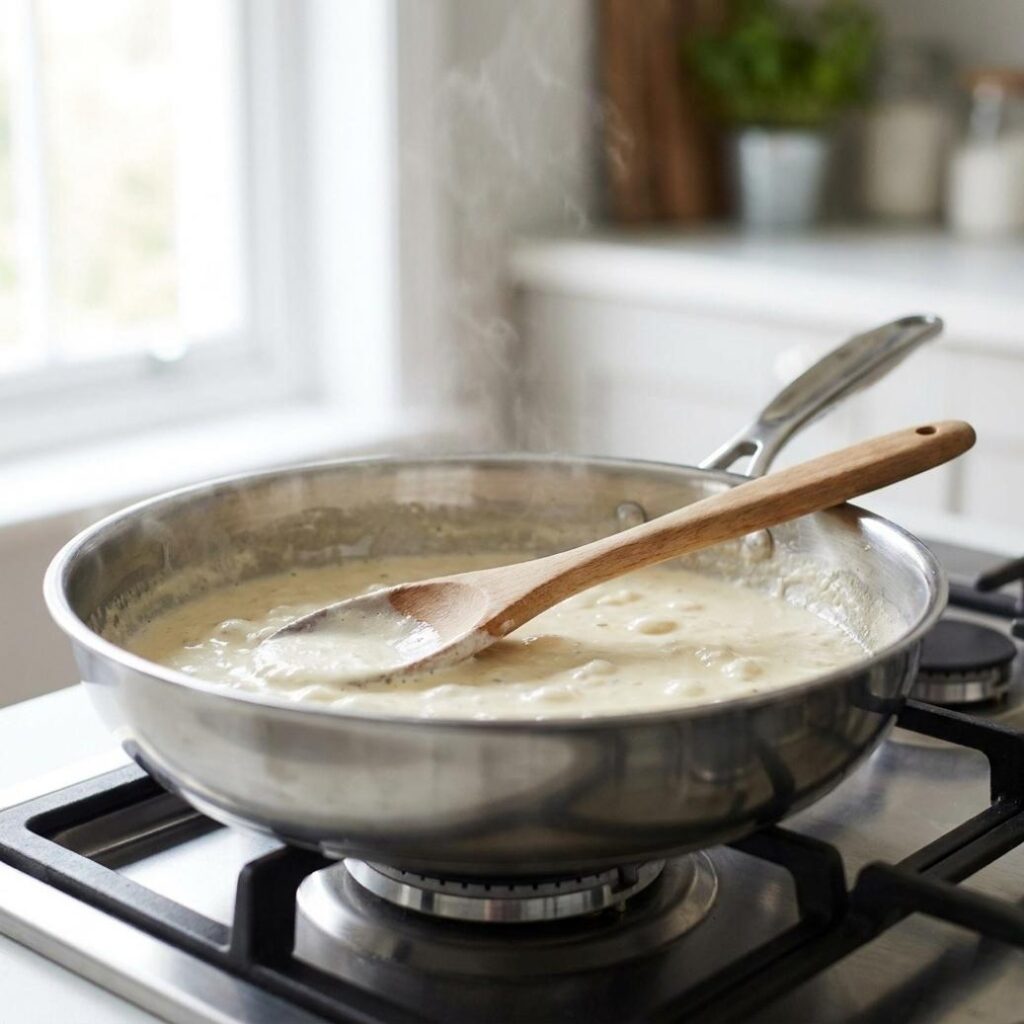
7. Season and Adjust the Consistency
A pinch of nutmeg here does something unexpected, it doesn’t taste like nutmeg at all, it just makes the cream flavor rounder. Add it along with salt and black pepper, tasting as you go. If the sauce feels thicker than you want, whisk in a splash of the pasta’s starchy cooking water, a tablespoon at a time, until it loosens back up.
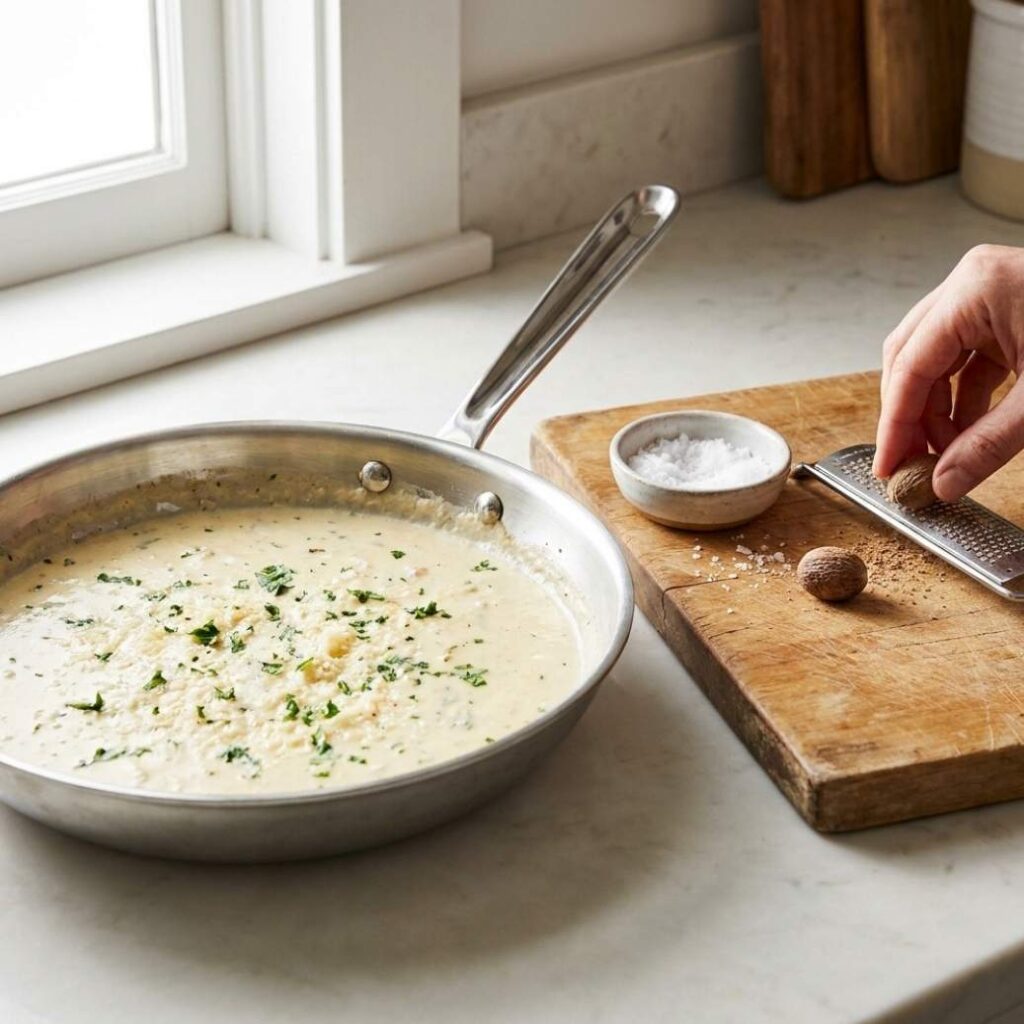
8. Toss With Hot Pasta Immediately
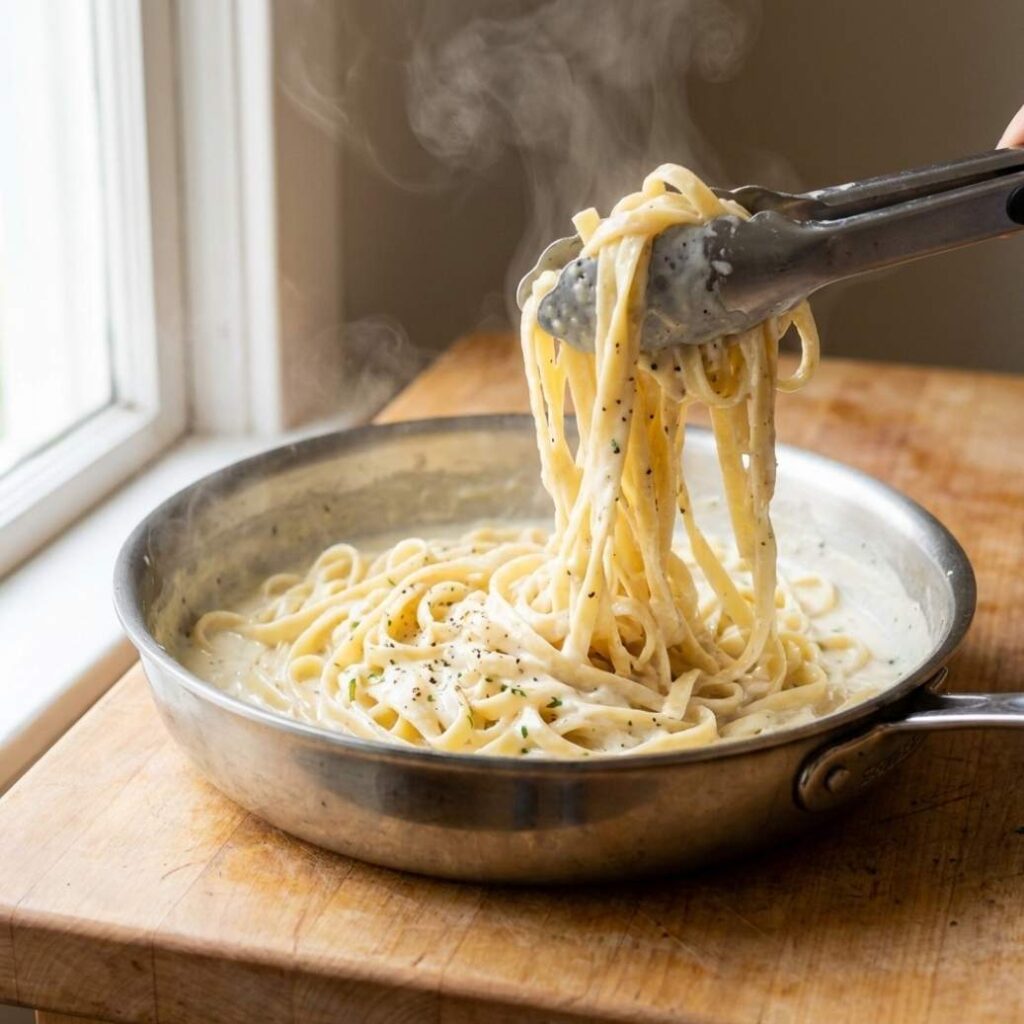
Alfredo sauce keeps thickening as it sits, even off the heat, so timing matters more here than in almost any other step. Drain 1 lb of fettuccine and add it straight to the pan while everything is still hot, tossing with tongs until every strand is coated. Serve it right away. Waiting even five minutes lets the sauce tighten up into something closer to a paste than a sauce.
Frequently Asked Questions
Can I use pre-shredded parmesan instead of grating my own?
You can, but it raises the risk of a grainy sauce, since the anti-caking coating on pre-shredded cheese doesn’t melt smoothly. Freshly grated cheese from a wedge gives the most reliable result.
Can I substitute half-and-half for heavy cream?
Yes, but the sauce will be thinner and less rich, and it’s more prone to breaking since half-and-half has less fat to hold everything together. Simmer it a bit longer to compensate.
Can I make this sauce ahead of time?
It’s best fresh, but you can make it up to a day ahead. Store it in the fridge and reheat gently over low heat with a splash of cream to bring back the original texture.
How long does alfredo sauce keep, and how do I reheat it?
It keeps in the fridge for up to 3 days in a sealed container. Reheat it slowly over low heat, stirring in a splash of milk or cream, rather than microwaving it, which tends to separate the sauce.
Final Thoughts
Alfredo sauce isn’t hard once you know the order things happen in, butter, garlic, cream, then cheese off the heat, never on it. Get that sequence right and you’ll never touch the jarred stuff again.