
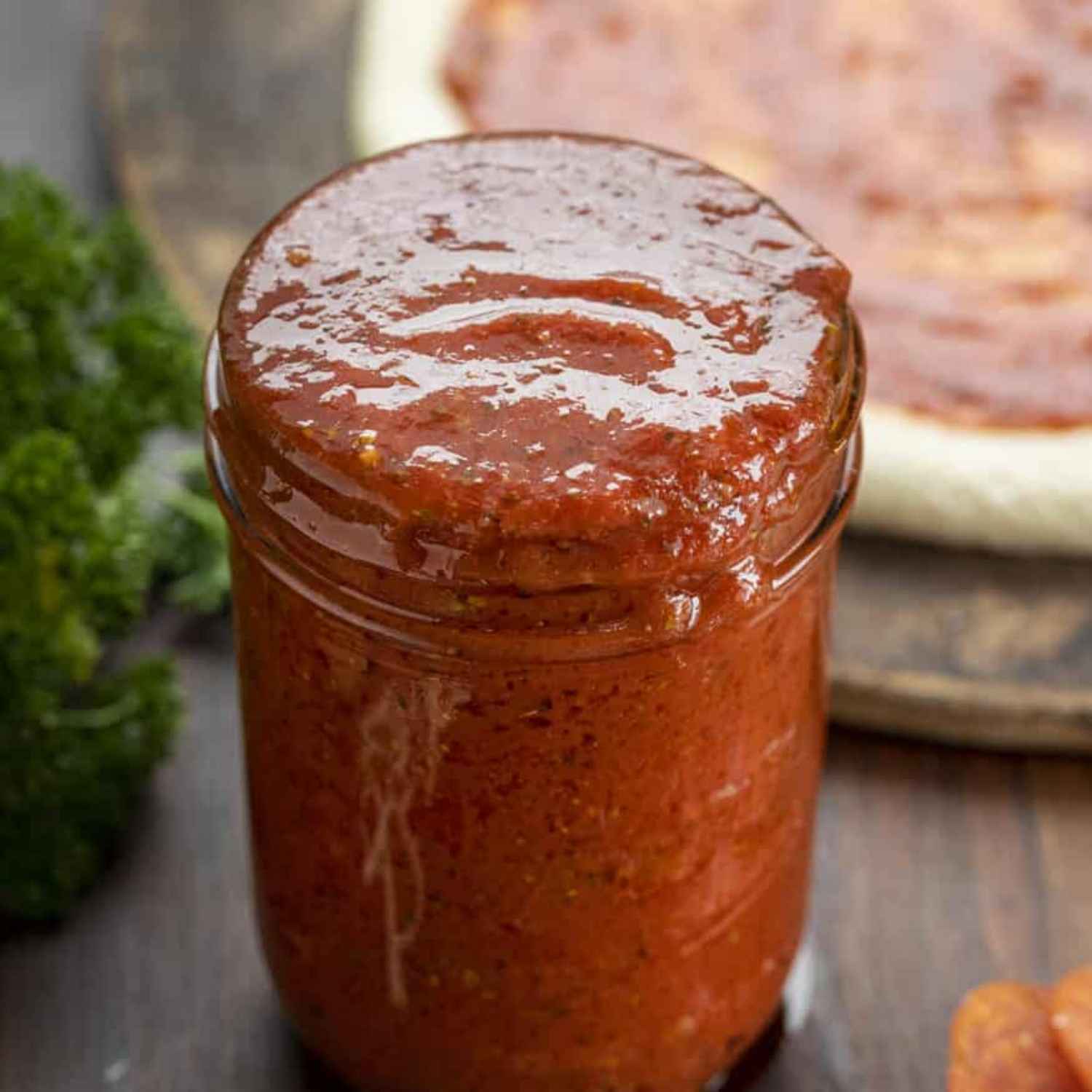
Jarred pizza sauce has a specific problem. It comes out thin, tastes vaguely sweet, and slides right off the dough into a watery pool at the edges. Then it bakes into something that never quite tastes like pizzeria sauce, no matter which brand you grab.
The fix is thicker than you think, and it starts with tomato paste instead of tomato sauce. Learning how to make pizza sauce this way skips the stovetop entirely. There is no simmering, no reducing, no pot to wash afterward. You whisk everything together in one bowl, let it sit, and it is done.
The whole thing takes about 5 minutes of hands-on work. The one part that takes patience is the rest, which lets the dried seasonings soften and spread through the sauce instead of sitting on top as gritty specks. Skip that hour and the sauce tastes raw and separated.
This makes enough for two pizzas, and it keeps in the fridge for up to five days. Grab a can of tomato paste, and let’s get it mixed.
🍅 What You Need
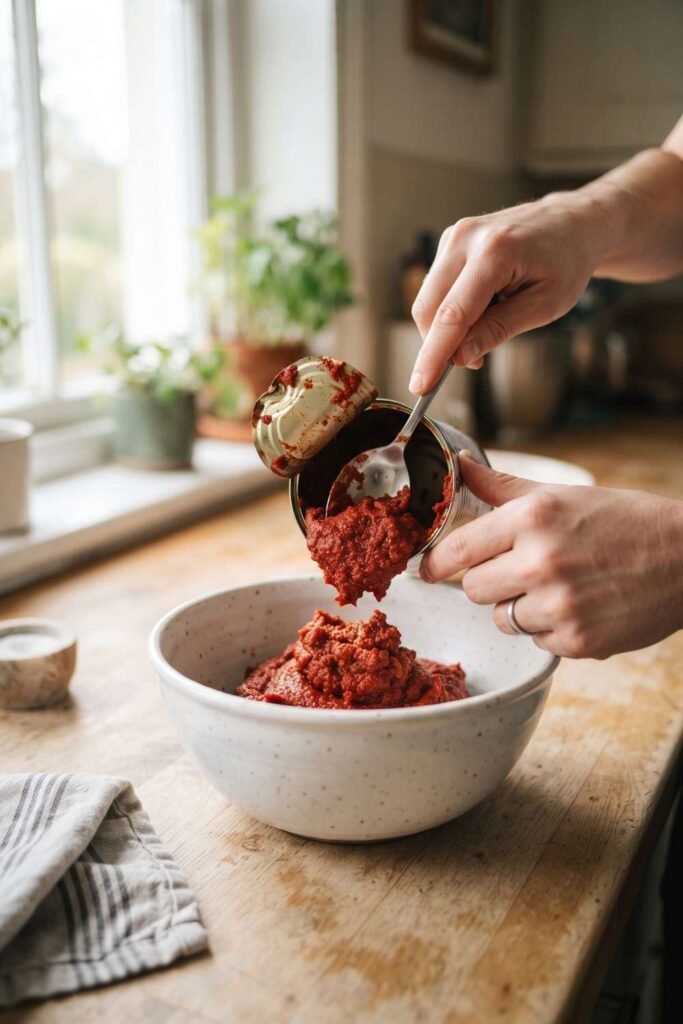
Step 1: Scrape the Tomato Paste Into a Bowl
A rubber spatula gets far more paste out of the can than a spoon does, and tomato paste clings hard to the sides.
Scrape the full 6 ounces into a medium mixing bowl, running the spatula around the inside edge twice.
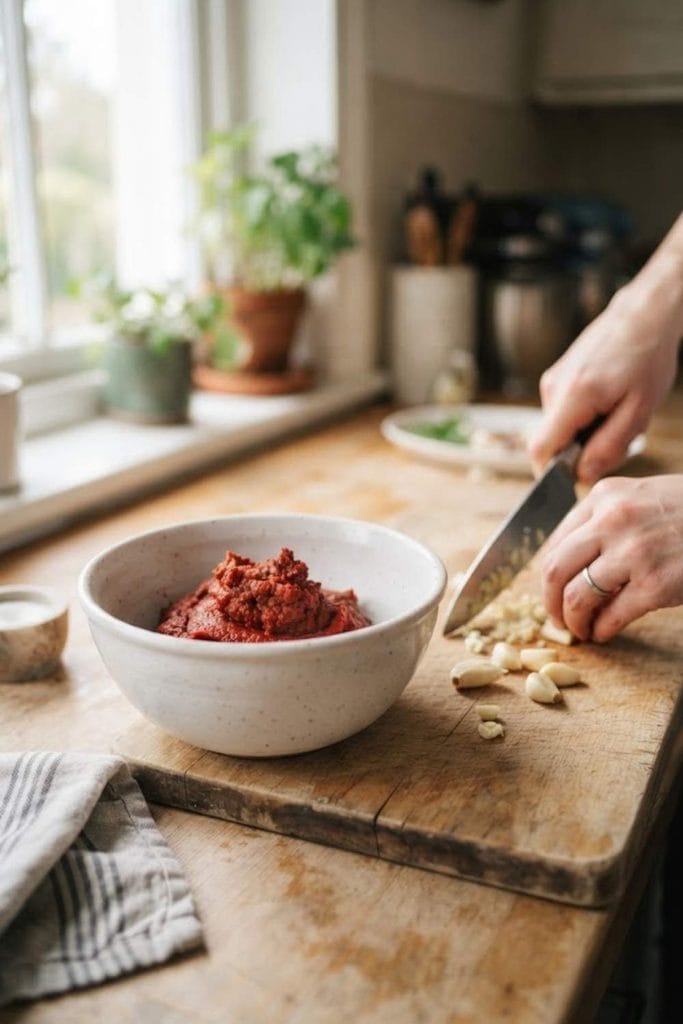
Step 2: Mince the Garlic Fresh
Jarred minced garlic works in a pinch, but it carries a slightly sour, preserved taste that comes through in a no-cook sauce where nothing gets cooked off. Mince 1 teaspoon of fresh garlic as finely as you can and add it directly to the paste.
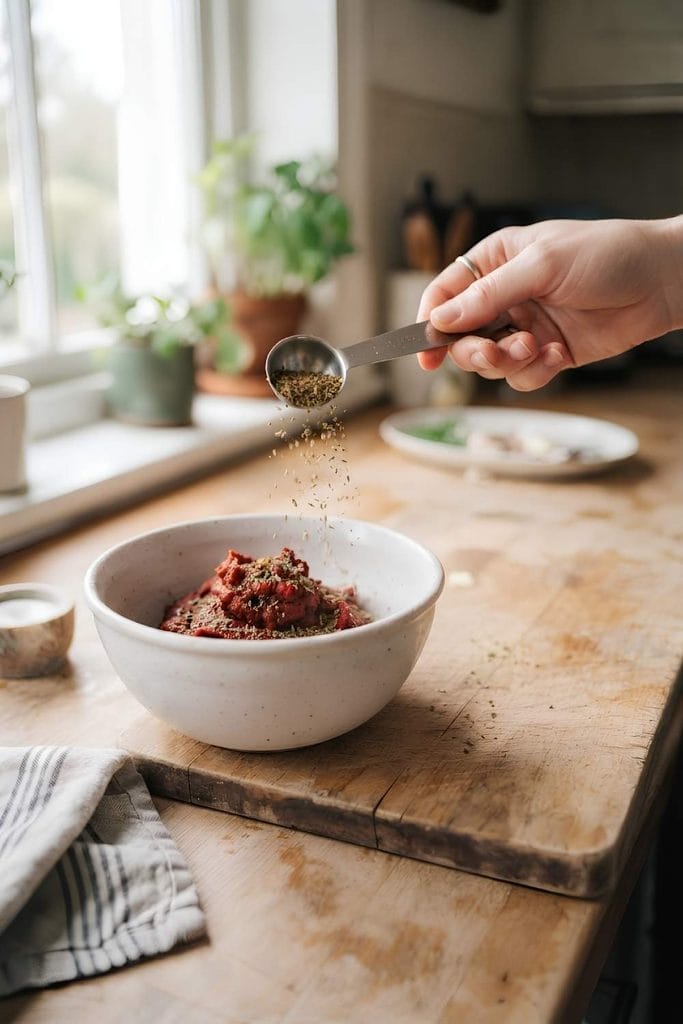
Step 3: Add the Dried Seasonings to the Paste
Dry ingredients go in before the liquids, so they distribute evenly instead of clumping once things get wet.
Add 1 tablespoon Italian seasoning, 1/2 teaspoon sugar, 1/2 teaspoon kosher salt, and 1/4 teaspoon black pepper to the bowl.
The sugar is not there to make the sauce sweet. It offsets the sharp acidity that tomato paste carries, which is why a small amount makes a noticeable difference.
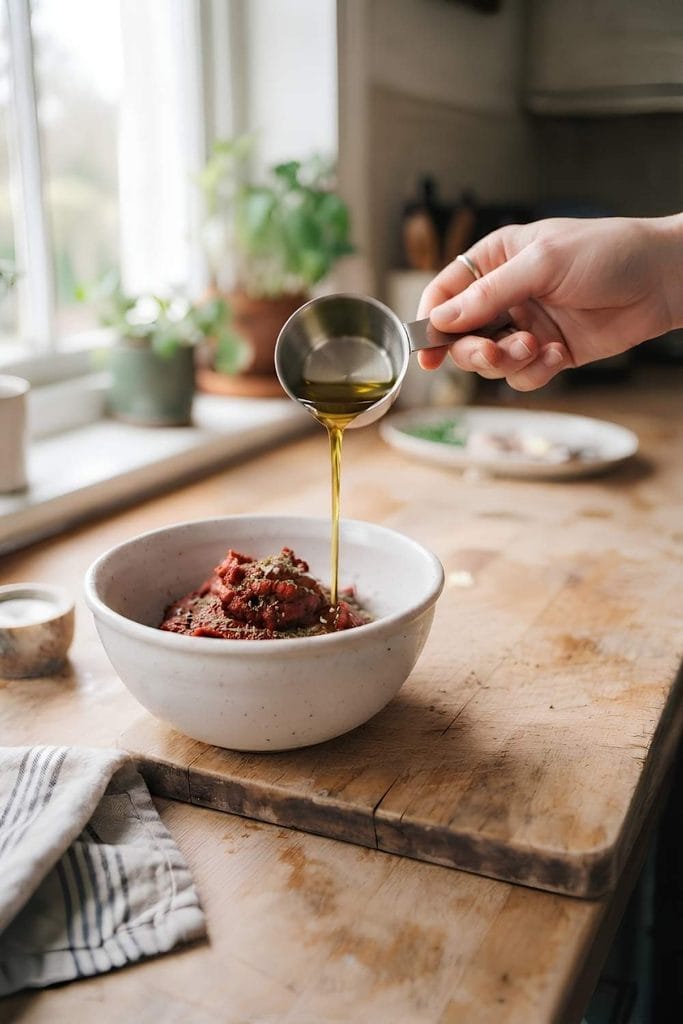
Step 4: Pour in the Olive Oil
A quarter cup sounds like a lot for one small can of paste, and it is meant to. The oil carries the dried seasonings and gives the sauce a smooth, rounded finish instead of a flat, watery one.
Pour 1/4 cup of extra virgin olive oil directly over the seasoned paste before any water goes in.
Step 5: Whisk in the Water a Little at a Time
Dumping the full cup in at once turns the sauce thin and lumpy, with paste clinging to the bottom while water sits on top.
Add roughly 1/4 cup of water at a time, whisking fully after each addition until the paste loosens and takes it in.
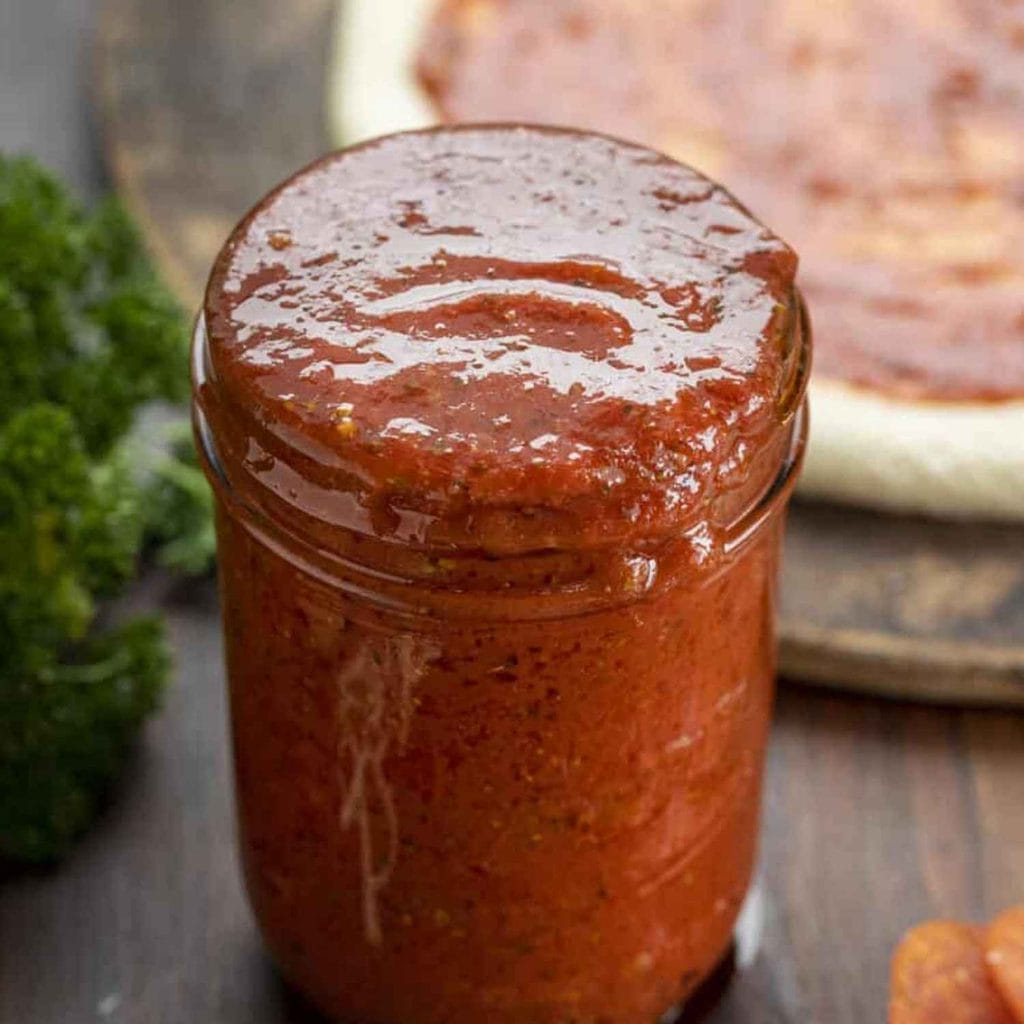
By the last addition, the sauce should be smooth and pourable but still thick enough to hold its shape on a spoon.
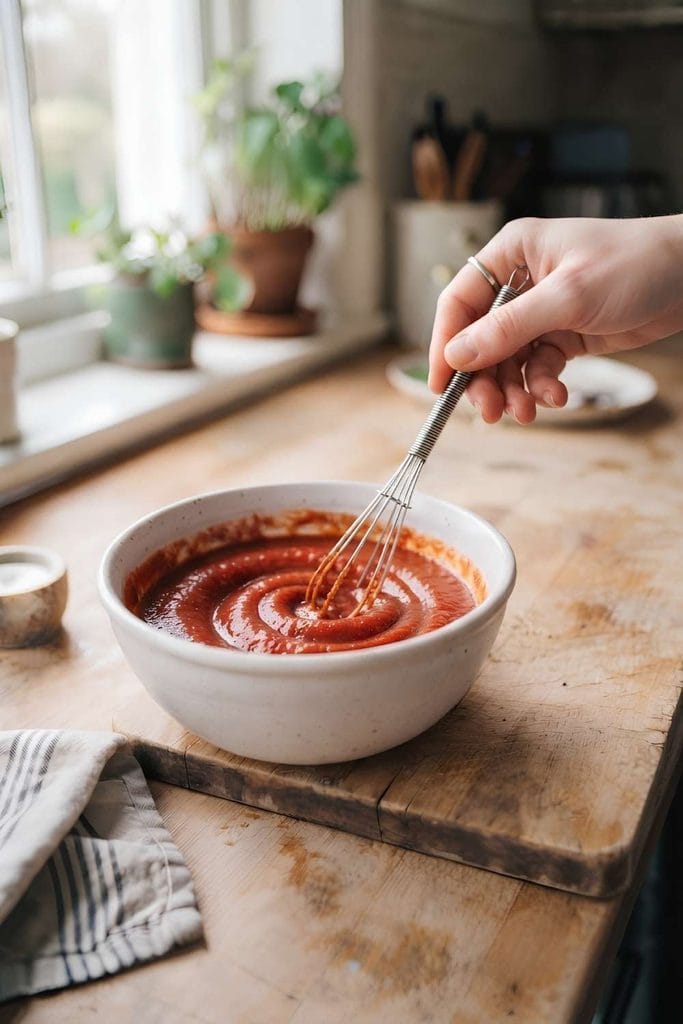
Once the sauce is too thin, there is no easy way back without opening a second can of paste. Stop adding water the moment it looks right, even if you have not used the full cup.
Step 6: Taste and Adjust the Salt and Sugar
Dip a spoon in and actually taste it before it rests. Tomato paste brands vary in acidity, so one can might need a pinch more sugar while another tastes fine as is.
If it tastes sharp or sour, add sugar in 1/8 teaspoon increments. If it tastes flat, it needs salt, not more seasoning.
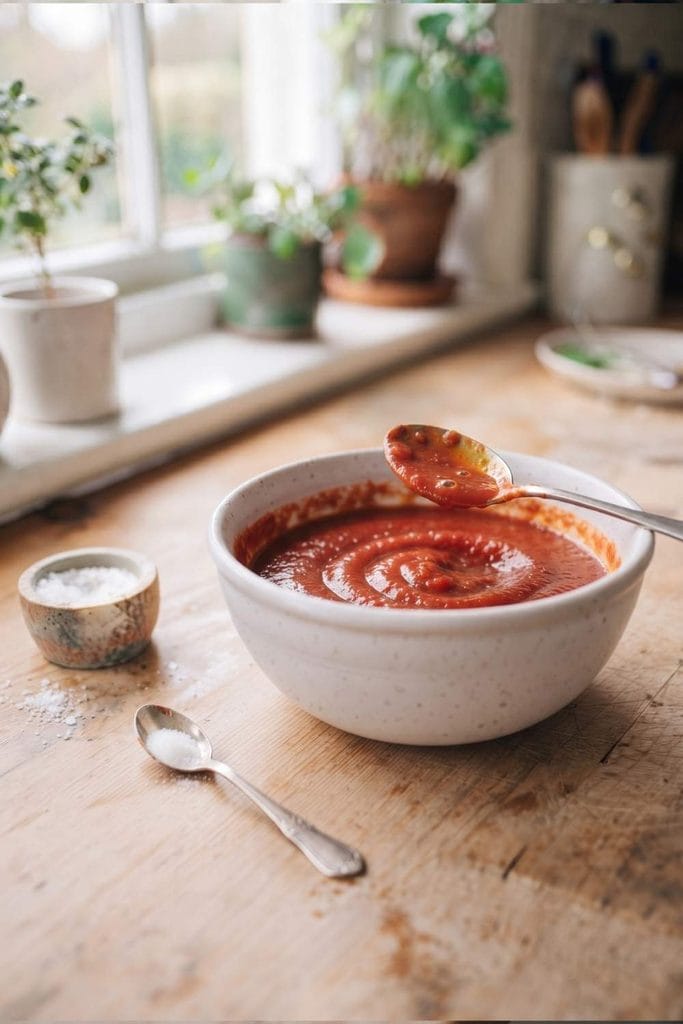
Taste again after the rest, not only before. The seasonings bloom in that hour, so a sauce that seemed underseasoned at first often lands exactly right once it has sat.
Step 7: Cover and Rest the Sauce for One Hour
Dried oregano, basil, and the rest of the Italian seasoning need moisture and time to soften. Straight out of the jar they sit on top of the sauce as gritty specks that taste dusty rather than herby.
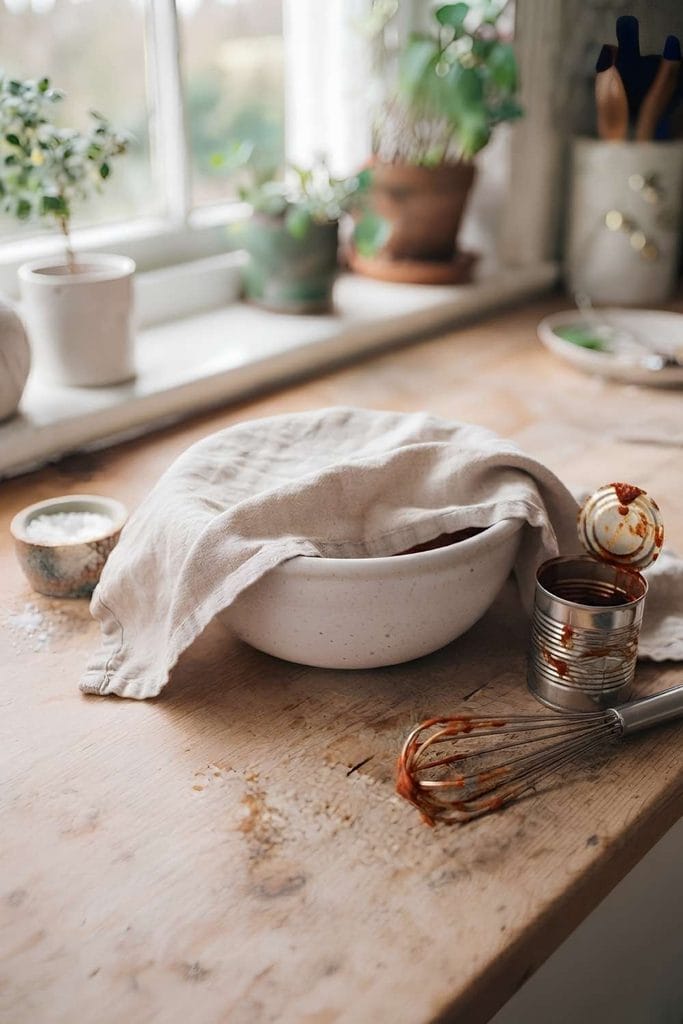
Cover the bowl and leave it on the counter at room temperature for 1 to 2 hours so those seasonings soften and spread through.
This step is optional in the strictest sense, since the sauce is technically usable right away. It just tastes noticeably raw and separated if you skip it.
Step 8: Spread It on Your Dough or Store It
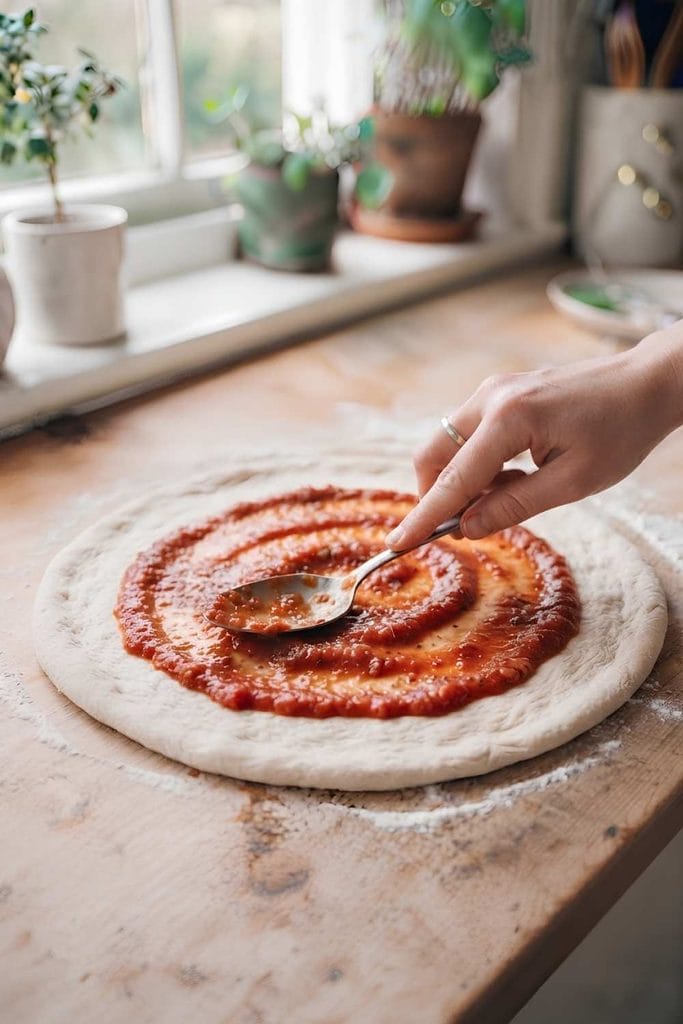
If you are making pizza now, spoon the sauce onto rolled-out dough and spread it in a thin, even layer using the back of the spoon, leaving about a half inch bare around the edge for the crust.
Otherwise, transfer the sauce to an airtight container and refrigerate for up to 5 days, or freeze it for up to 3 months in a freezer-safe container with a little room left at the top.
Ways to Use This Sauce Beyond Pizza
This sauce works anywhere a thick, seasoned tomato base makes sense, and it holds up better than jarred sauce because it was never watered down to begin with.
Spoon it into a small bowl and serve it warm as a dip for garlic knots, breadsticks, or mozzarella sticks. Spread a thin layer inside pizza rolls or calzones before folding them shut. Use it as the base for French bread pizzas or pizza sliders on Hawaiian rolls.
It also works stirred into a skillet pizza dip, or spread across flatbread with cheese for a quick lunch. Since it is already thick, it will not soak through bread the way thinner sauces do.
Three Ways to Change the Flavor
Make it spicy. Add 1/4 teaspoon of crushed red pepper flakes along with the dried seasonings. The heat builds during the rest, so start smaller than you think you need.
Make it garlic-forward. Double the garlic to 2 teaspoons and let the sauce rest for the full 2 hours instead of one. Raw garlic mellows as it sits, so the longer rest keeps it from tasting harsh.
Make it fresh-herb based. Swap the 1 tablespoon of dried Italian seasoning for 2 tablespoons of finely chopped fresh basil and oregano. Fresh herbs need no resting time to soften, so you can use the sauce right away.
🔧 Troubleshooting
⚠️ Sauce came out too thin
Too much water went in at once. Fix it: whisk in a spoonful of fresh tomato paste at a time until it thickens back up.
⚠️ Sauce is too thick to spread
Not enough water made it in, or the paste was especially dense. Fix it: add water one tablespoon at a time, whisking after each, until it spreads easily.
⚠️ Tastes flat and bland
It usually needs salt, not more herbs. Fix it: add salt in small pinches, tasting after each, and let it rest a bit longer.
⚠️ Tastes sharp or too acidic
Some tomato paste brands run more acidic than others. Fix it: add sugar in 1/8 teaspoon increments until the sharpness settles down.
Frequently Asked Questions
Can I skip the resting time?
You can, but the dried seasonings will still taste gritty and separate. Even 30 minutes helps if a full hour is not possible.
Can I freeze this sauce?
Yes. Pour it into a freezer-safe container, leave a little room at the top for expansion, and freeze for up to 3 months.
Can I use crushed tomatoes instead of paste?
Crushed tomatoes hold far more water, so the sauce would need simmering to thicken. This no-cook method depends on paste being concentrated already.
How long does it keep in the fridge?
Up to 5 days in an airtight container. Give it a quick stir before using, since a little separation is normal.
Conclusion
You have a thick, seasoned pizza sauce sitting in a bowl, and not one pot went on the stove to get there. Five minutes of whisking, one hour of waiting, and it beats anything sitting in a jar at the store.
Next time you know how to make pizza sauce this way, double the batch and freeze half. Future you will appreciate having it ready.
Save this recipe now so it is there the next time pizza night comes around.
🍅 Quick Reference Card
What You Need
- 1 can (6 oz) tomato paste
- 1 tsp minced garlic
- 1 tbsp Italian seasoning
- 1/2 tsp sugar, 1/2 tsp salt, 1/4 tsp pepper
- 1 cup water
- 1/4 cup olive oil
Steps
- Scrape tomato paste into a bowl
- Mince the garlic fresh
- Add all dried seasonings
- Pour in the olive oil
- Whisk in water gradually
- Taste, adjust salt and sugar
- Cover and rest 1 hour
- Spread on dough or store