
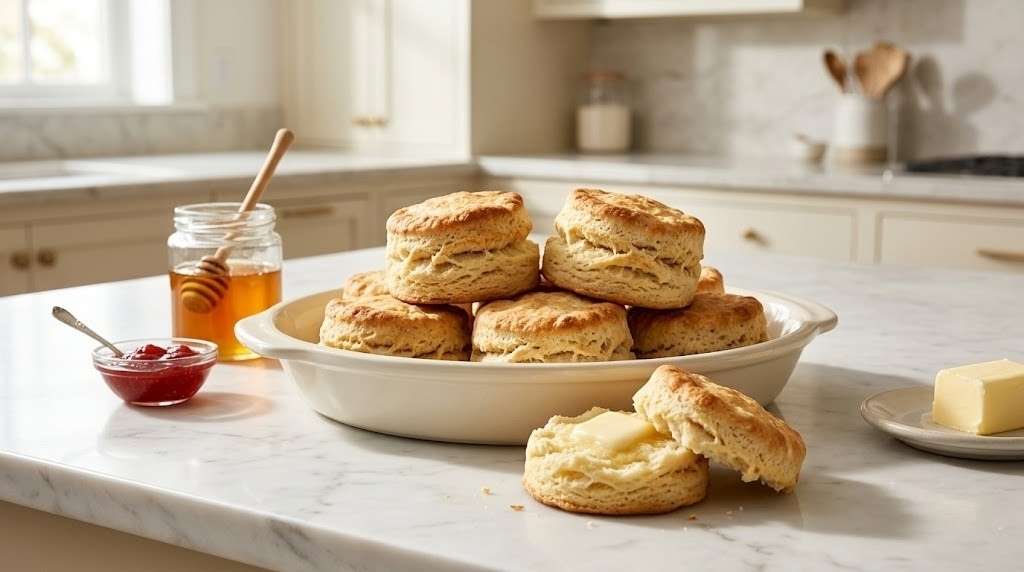
Learning how to make buttermilk biscuits at home is much easier when you keep the ingredients cold and avoid overworking the dough. Warm butter can make the biscuits spread, while too much flour or mixing can leave them dry and firm.
This recipe uses cold butter, cold buttermilk, and a simple folding method to build flaky layers. You do not need a mixer or food processor. A large bowl, pastry cutter, baking sheet, and round cutter are enough.
The recipe makes about 8 biscuits and takes around 35 minutes. Keep the butter and buttermilk in the refrigerator until you need them. Work gently, leave visible butter pieces in the dough, and preheat the oven fully before baking.
1. Preheat the oven and prepare the pan
Move an oven rack to the center position and preheat the oven to 450°F. Allow at least 15 minutes for the oven to heat fully.
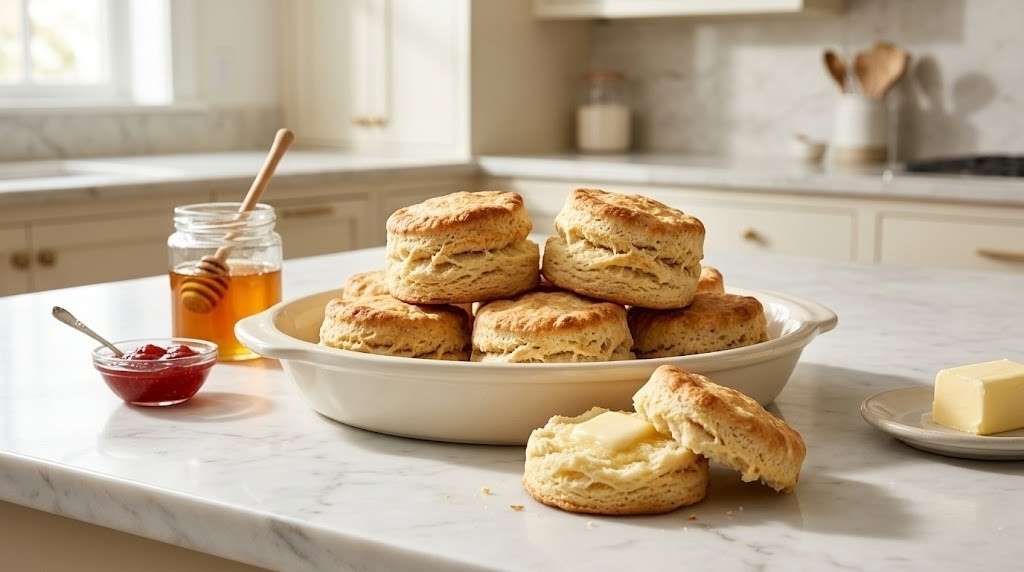
Line a light-colored baking sheet with parchment paper. A dark pan may brown the biscuit bottoms too quickly. Avoid adding a heavy layer of oil or butter to the pan because extra grease can make the biscuits spread.
Keep the prepared pan close to your work area so the shaped biscuits can go into the oven without delay.
2. Whisk the dry ingredients together
Add these ingredients to a large mixing bowl:
- 2½ cups or 300 grams all-purpose flour
- 1 tablespoon baking powder
- ½ teaspoon baking soda
- 1 teaspoon granulated sugar
- 1 teaspoon fine salt
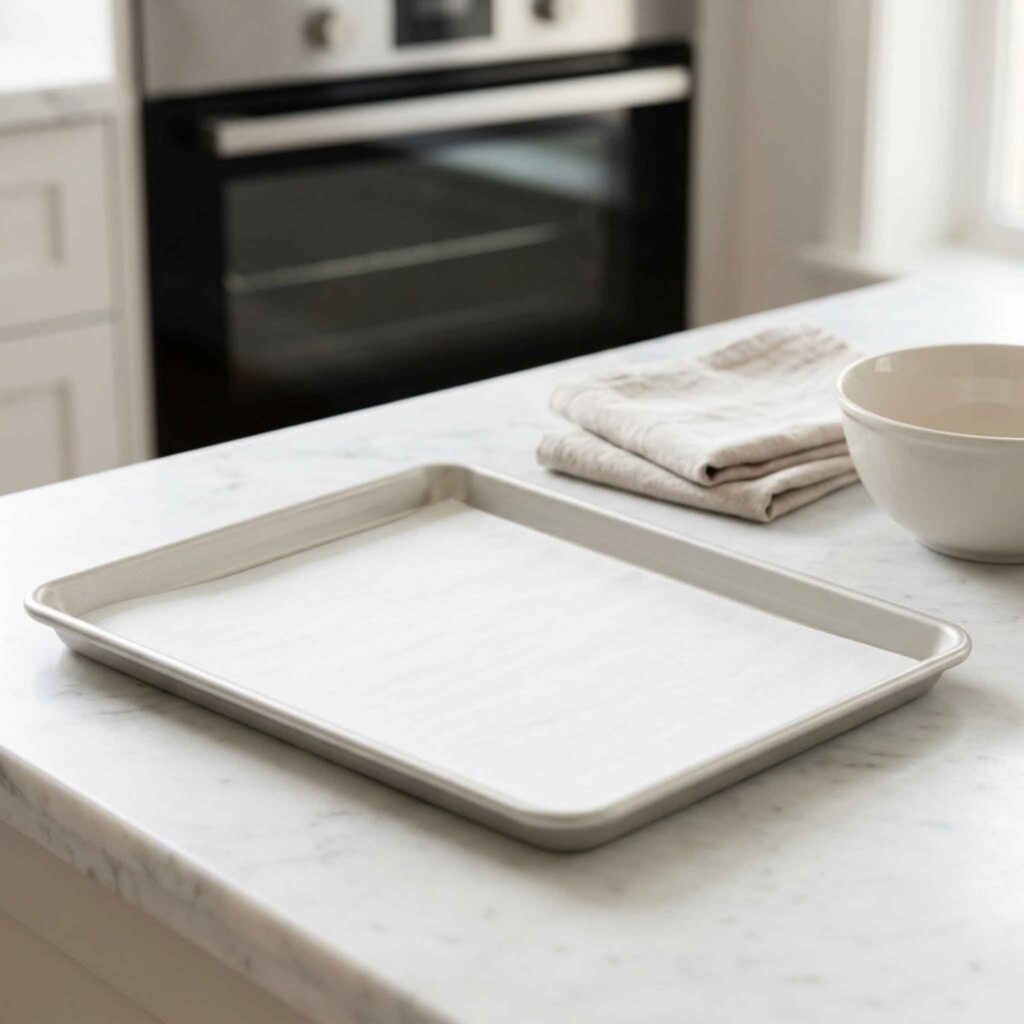
Whisk for about 30 seconds, reaching around the sides and bottom of the bowl.
Spoon flour into the measuring cup and level it with a knife. Do not scoop flour straight from the bag because packed flour can make the biscuits dry.
3. Cut the cold butter into the flour
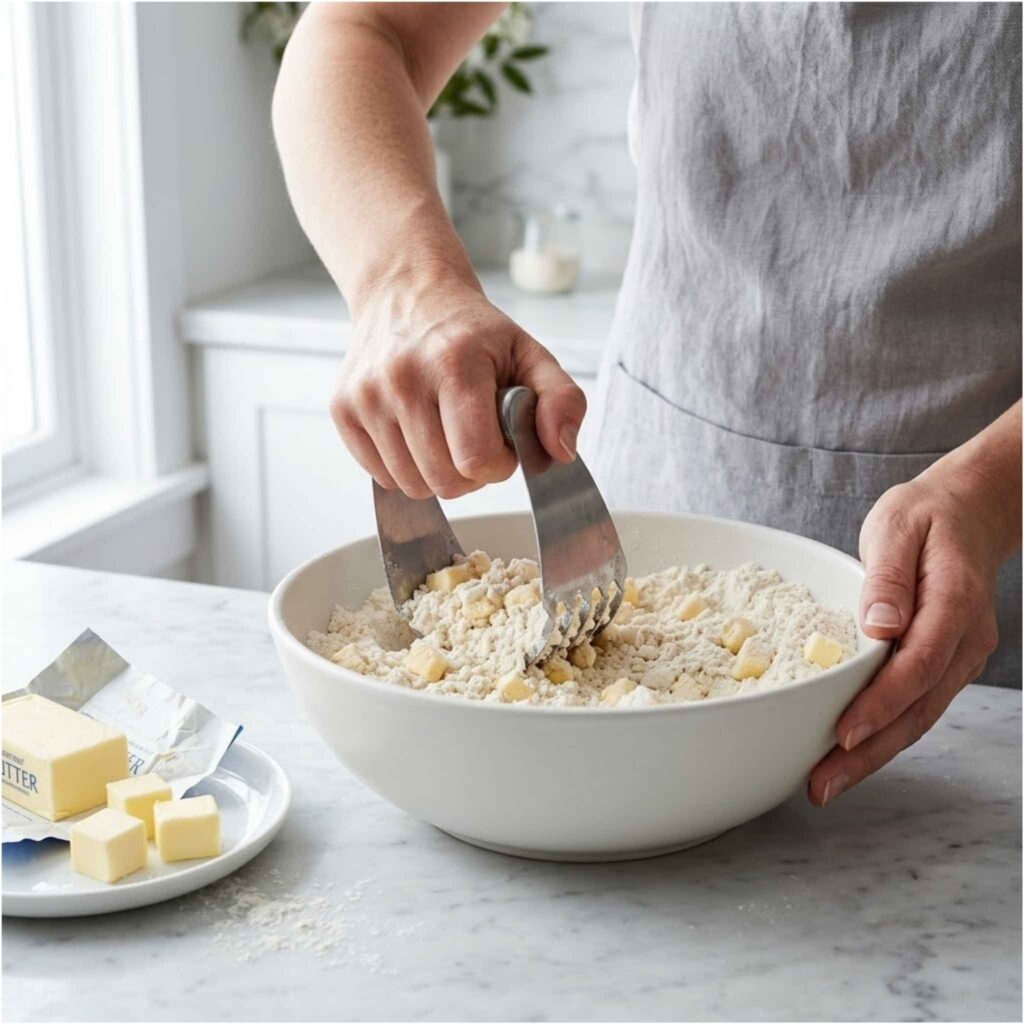
Cut ½ cup or 113 grams cold unsalted butter into small cubes. Add the cubes to the flour mixture.
Use a pastry cutter or two forks to work the butter into the flour. Stop when most pieces are about the size of peas. A few larger flakes are fine.
Do not blend the butter until the mixture looks smooth. Visible butter pieces melt in the oven and release steam, which helps separate the biscuit layers. Refrigerate the bowl for 10 minutes if the butter starts feeling soft.
4. Fold in the cold buttermilk
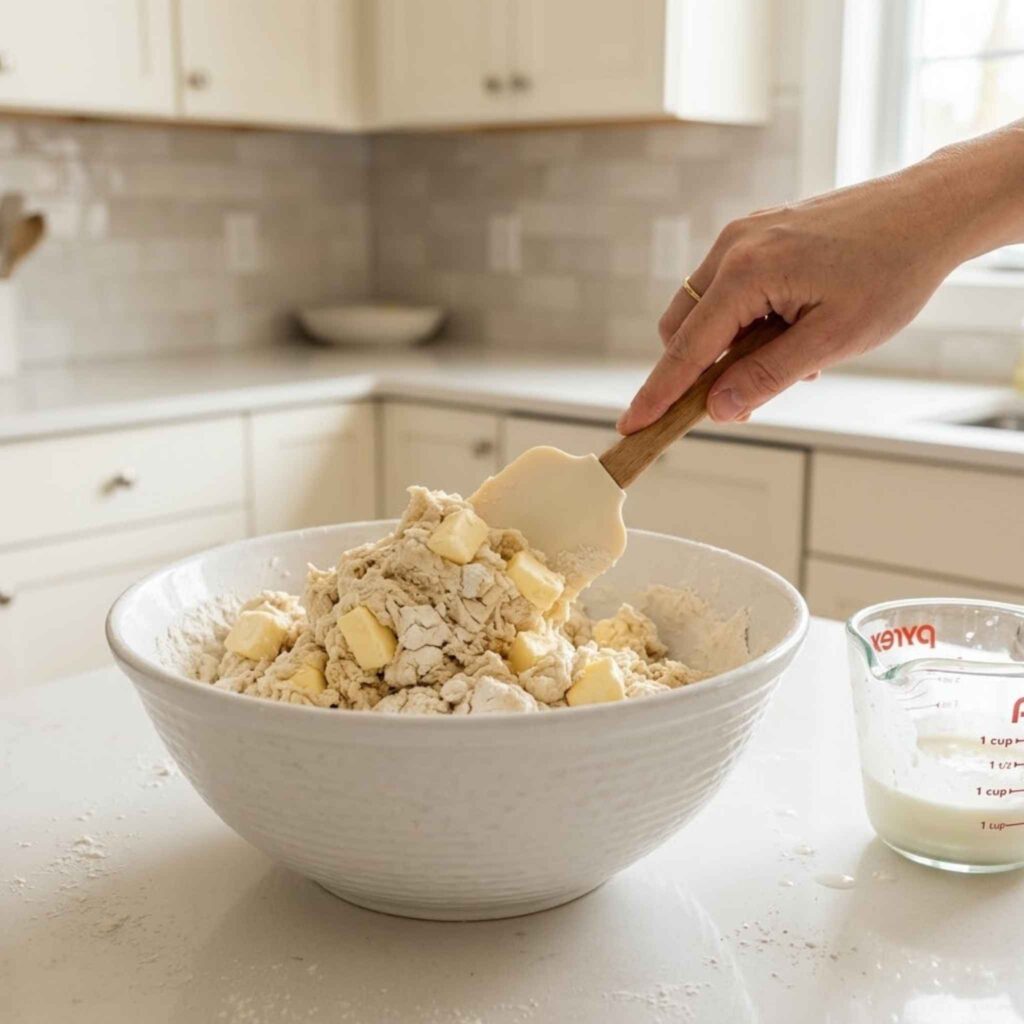
Make a well in the middle of the flour mixture. Pour in 1 cup cold buttermilk, keeping 1 tablespoon aside for brushing the tops.
Use a rubber spatula to pull the flour from the sides toward the center. Fold the mixture about 12 to 15 times.
The dough should look rough and form soft clumps. A few dry spots are normal. When a large amount of flour remains loose, add more buttermilk 1 teaspoon at a time. Stop before the dough becomes wet, smooth, or sticky.
5. Shape and fold the dough
Sprinkle about 1 tablespoon flour over a clean counter. Turn the dough and loose crumbs onto the surface.
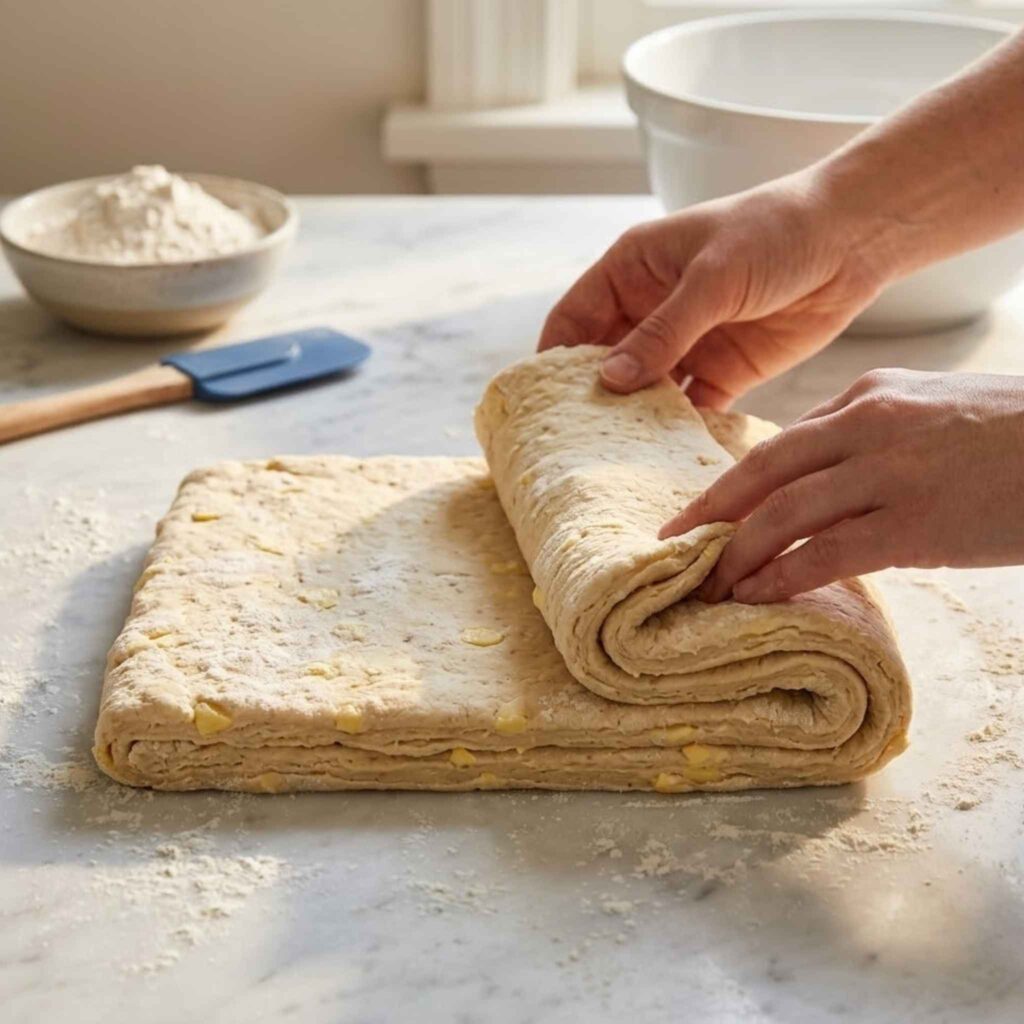
Bring the dough together with light pressure. Pat it into a rectangle about 1 inch thick.
Fold the top third toward the center, then fold the bottom third over it. Turn the dough and pat it back into a rectangle. Repeat until you have completed three folds.
These folds create stacked layers. Place the dough in the refrigerator for 10 minutes if the butter begins to smear.
6. Cut and arrange the biscuits
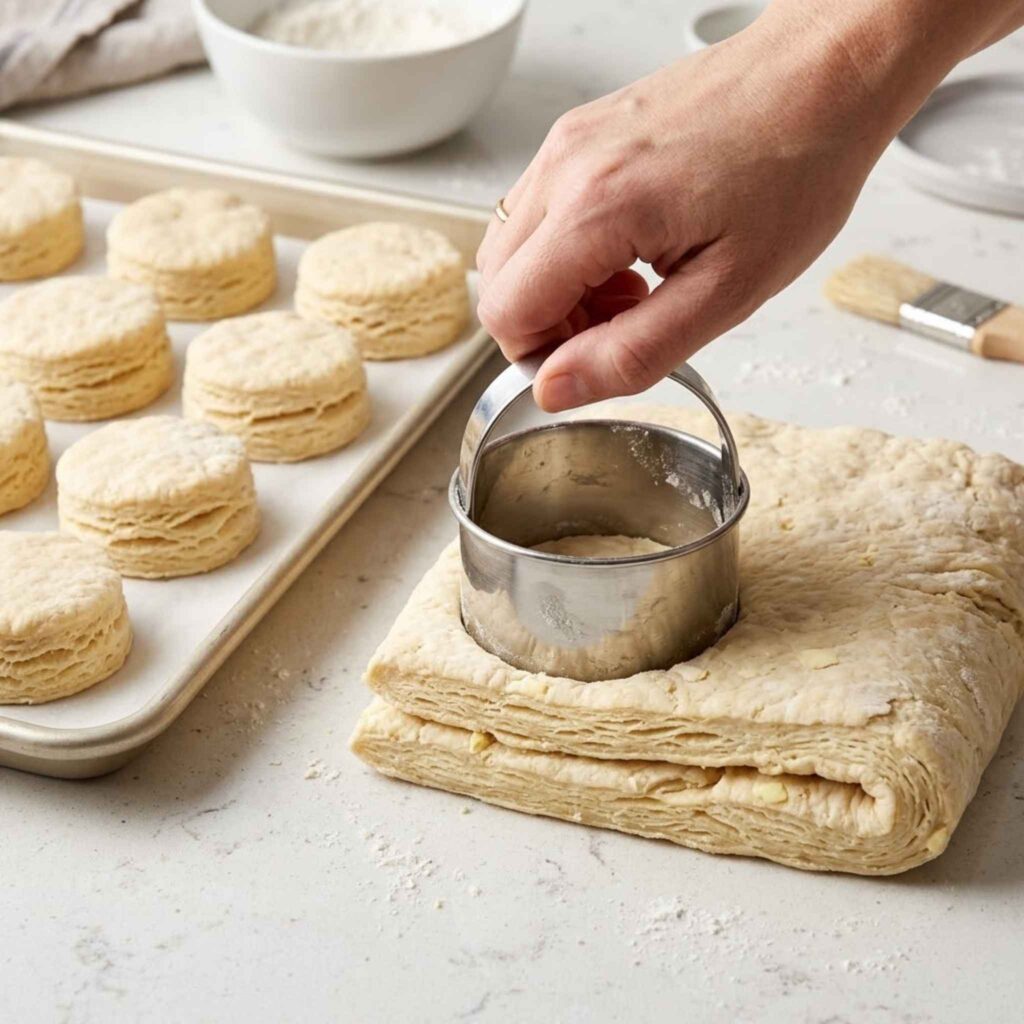
Pat the folded dough to about 1 inch thick. Dip a 2½-inch round biscuit cutter into flour.
Press the cutter straight down and lift it straight back up. Do not twist it because twisting can seal the edges and stop the layers from rising.
Cut the rounds close together. Stack the remaining scraps gently, pat them once, and cut the final biscuits.
Arrange the biscuits on the prepared pan with no more than ¼ inch between them for tall biscuits with soft sides.
7. Brush the biscuit tops
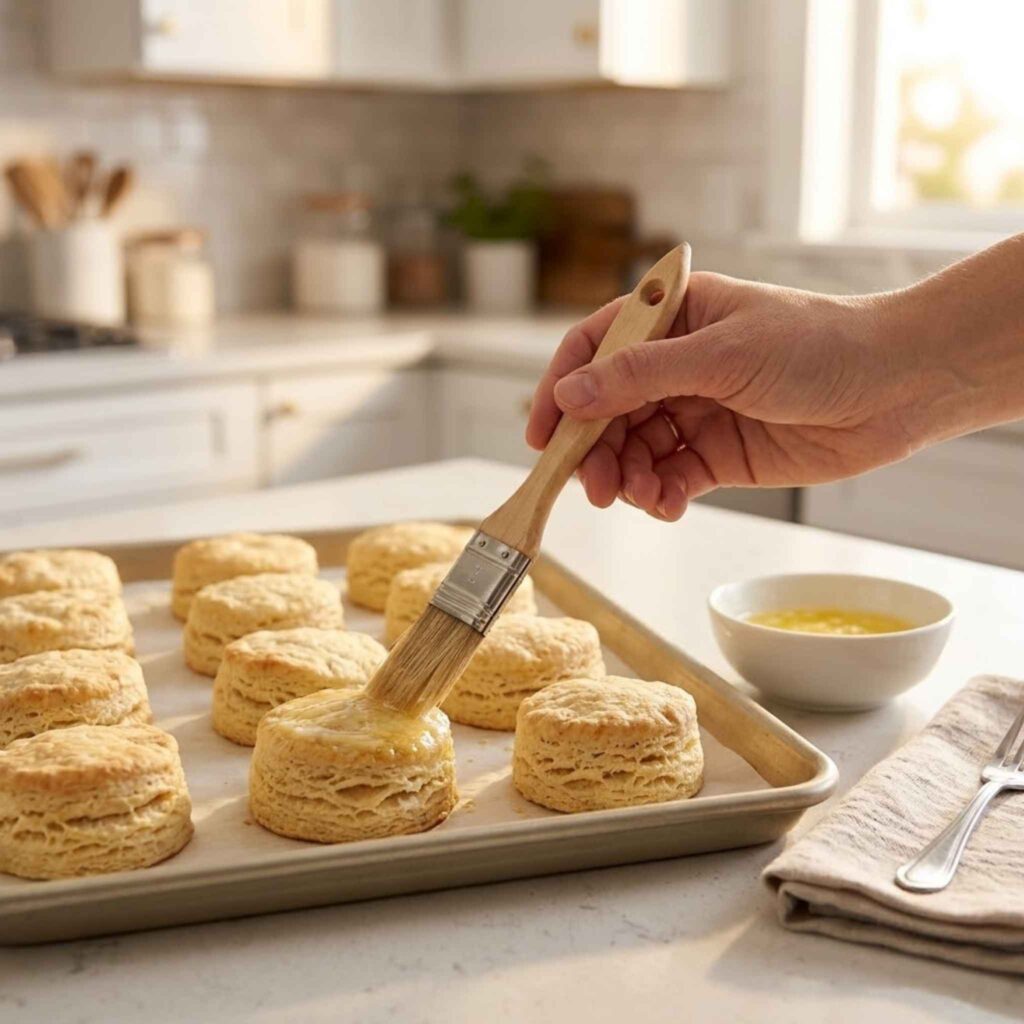
Brush the reserved buttermilk over the top of each biscuit with a pastry brush.
Use a thin, even layer. Do not allow the liquid to run down the sides because it can seal the cut layers.
Buttermilk helps the tops turn golden. Melted butter can also be used, but it creates a softer finish and may brown differently.
Optional toppings include:
- A small pinch of flaky salt
- Cracked black pepper
- A light dusting of sugar for breakfast biscuits
8. Bake the biscuits until golden
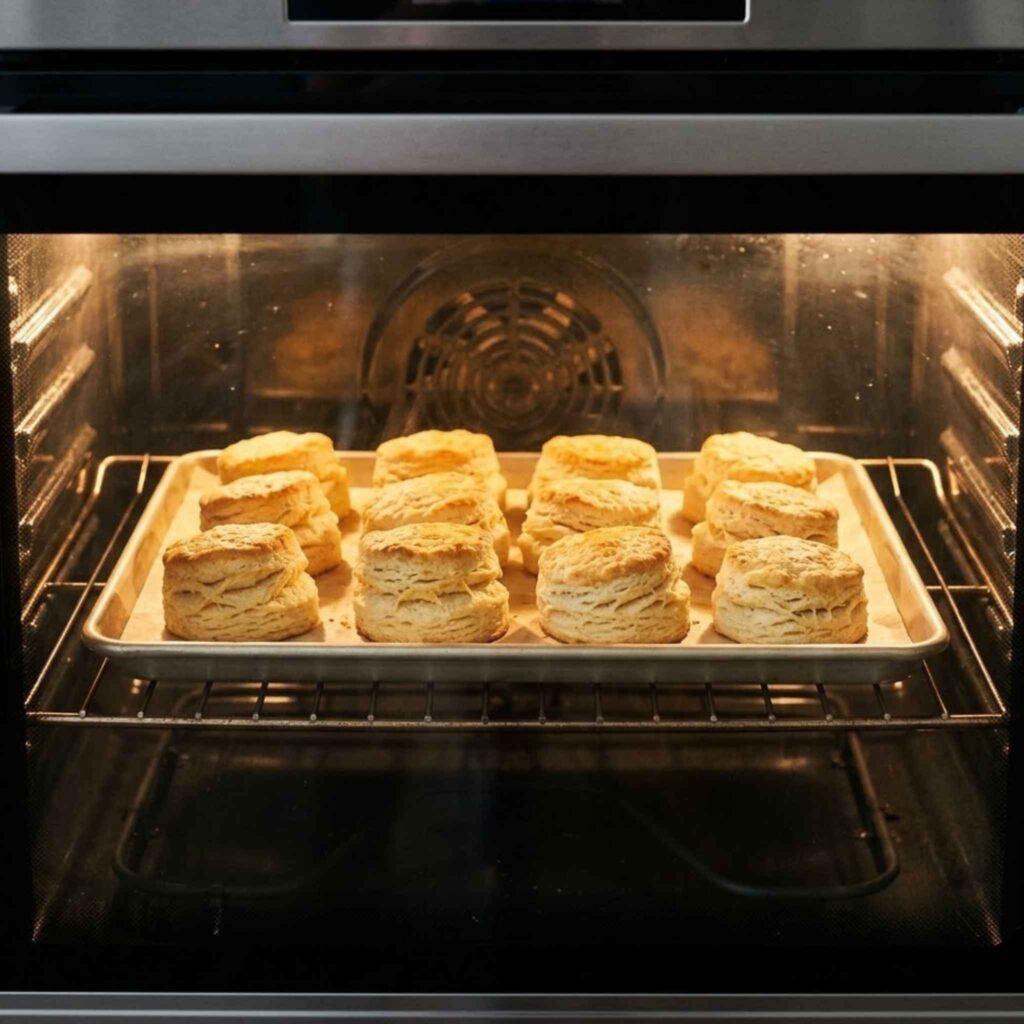
Place the baking sheet on the center rack. Bake the biscuits for 12 to 15 minutes.
Keep the oven door closed for at least the first 10 minutes. Opening it early releases heat and can interrupt the rise.
The biscuits are ready when:
- The tops are golden.
- The sides look dry and set.
- The layers are visible.
- The centers no longer look wet.
9. Cool the biscuits briefly
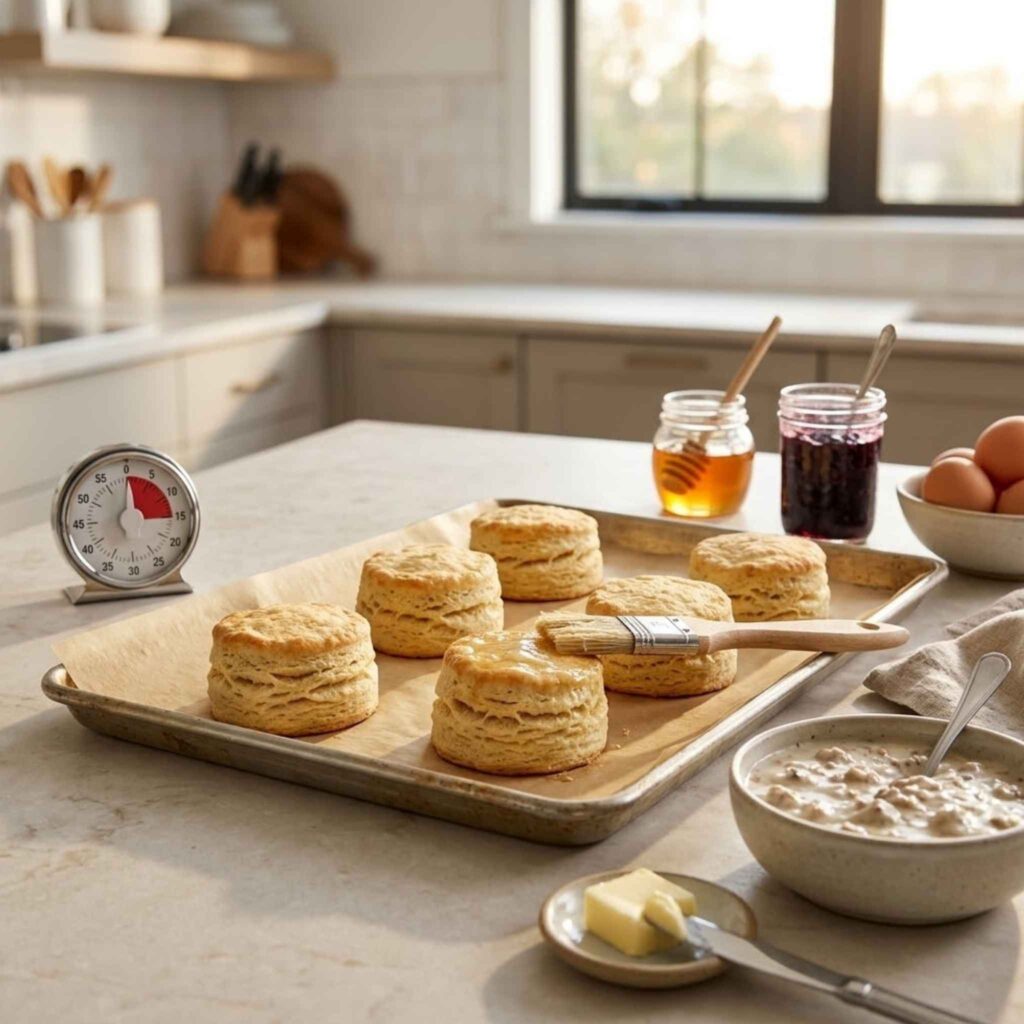
Place the baking sheet on a heat-safe surface and cool the biscuits for 5 minutes.
The centers continue setting during this time. Pulling them apart immediately may make the middle look wet, even when the biscuits are baked.
Brush the warm tops with melted butter for a softer finish. Serve with honey, jam, eggs, sausage gravy, or extra butter
Frequently Asked Questions
Can I make biscuits without buttermilk?
Add 1 tablespoon lemon juice or white vinegar to a measuring cup. Pour in enough whole milk to reach 1 cup.
Stir and leave it for 5 to 10 minutes. The mixture may look slightly curdled. This is normal.
Because this substitute can be thinner than cultured buttermilk, hold back 1 to 2 tablespoons at first and add more only if the dough stays too dry.
Can I freeze unbaked biscuits?
Place the cut biscuits on a parchment-lined tray and freeze them for about 2 hours.
Move the frozen biscuits into a freezer-safe bag and store them for up to 3 months. Bake them straight from frozen at 450°F and add about 3 to 5 minutes to the normal baking time.
How should I reheat baked biscuits?
Wrap the biscuits loosely in foil and heat them at 350°F for 8 to 10 minutes.
Frozen baked biscuits may need 15 to 18 minutes. Open the foil during the final 2 minutes for a firmer top.
For one biscuit, microwave it under a slightly damp paper towel for 10 to 15 seconds.
Which flour works best for biscuits?
Regular all-purpose flour works well. A lower-protein flour can create softer biscuits, but it is not required.
Bread flour has more protein and can make the biscuits chewy. Self-rising flour should only be used in a recipe written for it because it already contains baking powder and salt.
How should I store leftover biscuits?
Allow the biscuits to cool fully before placing them in an airtight container.
Store them:
- At room temperature for up to 2 days
- In the refrigerator for up to 5 days
- In the freezer for up to 2 months
Can I make biscuits without buttermilk?
Add 1 tablespoon lemon juice or white vinegar to a measuring cup. Pour in enough whole milk to reach 1 cup, stir, and leave it for 5 to 10 minutes.
Can I freeze unbaked biscuits?
Freeze the cut biscuits on a tray for 2 hours. Store them in a freezer bag for up to 3 months. Bake from frozen and add 3 to 5 minutes to the baking time.
How should I reheat biscuits?
Wrap them loosely in foil and heat at 350°F for 8 to 10 minutes. For one biscuit, microwave it beneath a slightly damp paper towel for 10 to 15 seconds.
Which flour works best?
Regular all-purpose flour works well. Low-protein flour creates a softer biscuit. Avoid bread flour because it can make the texture chewy.
How should I store leftover biscuits?
- Room temperature: 2 days
- Refrigerator: 5 days
- Freezer: 2 months
Common Mistakes
Using warm butter
Warm butter blends into the flour instead of staying in small pieces. This reduces the steam pockets needed for flaky layers.
Keep the butter refrigerated and chill the dough for 10 minutes when it starts feeling greasy.
Measuring too much flour
Packed flour makes the dough dry and difficult to hold together.
Use the spoon-and-level method or weigh 300 grams of flour for a more consistent result.
Mixing until the dough is smooth
Smooth dough may produce firm biscuits because too much mixing develops gluten.
Stop while the mixture still looks rough and slightly uneven.
Adding too much buttermilk
Wet dough can stick to the counter and spread in the oven.
Add extra liquid only when a large amount of dry flour remains. Add it 1 teaspoon at a time.
Twisting the biscuit cutter
Twisting presses the cut layers together and can limit the rise.
Press the cutter straight down and lift it straight up.
Baking in a cool oven
A cool oven allows the butter to melt before the biscuit structure begins setting.
Preheat the oven fully to 450°F and avoid opening the door during the first 10 minutes.
Common Mistakes Infographic
Using Warm Butter
Soft butter blends into the flour and reduces the steam pockets needed for flaky layers.
Adding Too Much Flour
Packed flour makes the dough dry, crumbly, and difficult to bring together.
Overmixing the Dough
Mixing until smooth develops extra gluten and can make the biscuits firm.
Adding Too Much Buttermilk
Wet dough can stick to the counter and spread instead of rising upward.
Twisting the Cutter
Twisting seals the cut edges and prevents the biscuit layers from opening.
Using a Cool Oven
A cool oven allows the butter to melt before the biscuit structure sets.
- Keep the butter and buttermilk cold.
- Stop mixing before the dough becomes smooth.
- Press the biscuit cutter straight down.
Pro Tips
- Chill the empty mixing bowl for 10 minutes when your kitchen feels warm.
- Freeze the butter for 20 minutes and grate it through the large holes of a box grater for evenly sized pieces.
- Place the biscuits close together to encourage upward growth and softer sides.
- Use a sharp metal cutter for clean edges and better layers.
- Bake the biscuits soon after shaping so the butter remains firm.
- Brush melted butter over the tops after baking for a softer finish and richer flavor.