
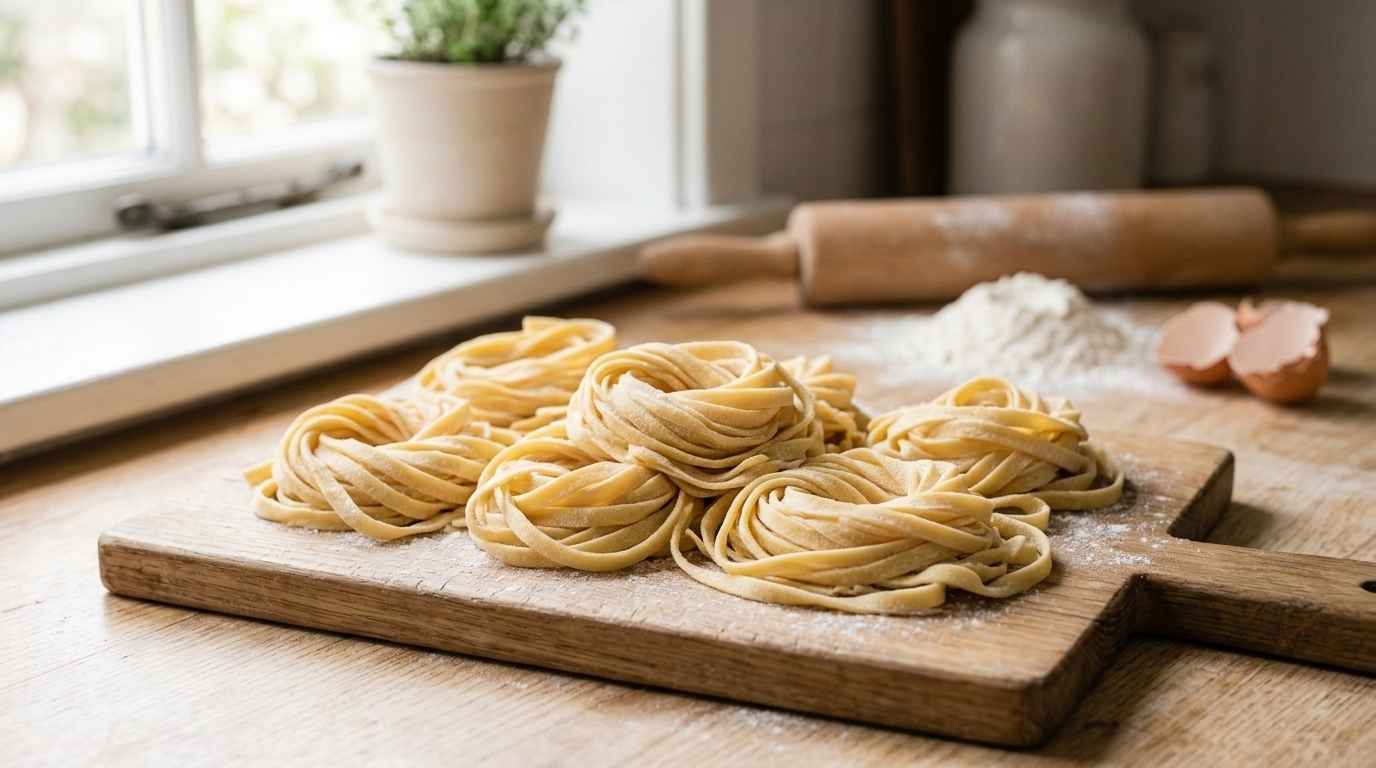
Store-bought pasta works fine on a busy night, but it’s never going to taste like the real thing. Fresh pasta has a completely different texture, silkier, with a little more chew, and it soaks up sauce in a way dried pasta just can’t match.
Learning how to make pasta at home sounds intimidating, but the truth is it only takes two ingredients you probably already have in your kitchen.
This guide walks you through the entire process from a pile of flour on your counter to a pot of tender, fresh noodles, using nothing more than flour, eggs, and your own hands. No pasta machine required.
We’re going to build the dough the traditional way, rest it so the gluten relaxes, then roll and cut it into real noodles. The hands-on time is about 30 minutes, plus a 30-minute rest for the dough. Clear off some counter space, and let’s get started
Step 1: Mound the Flour and Make a Well in the Center
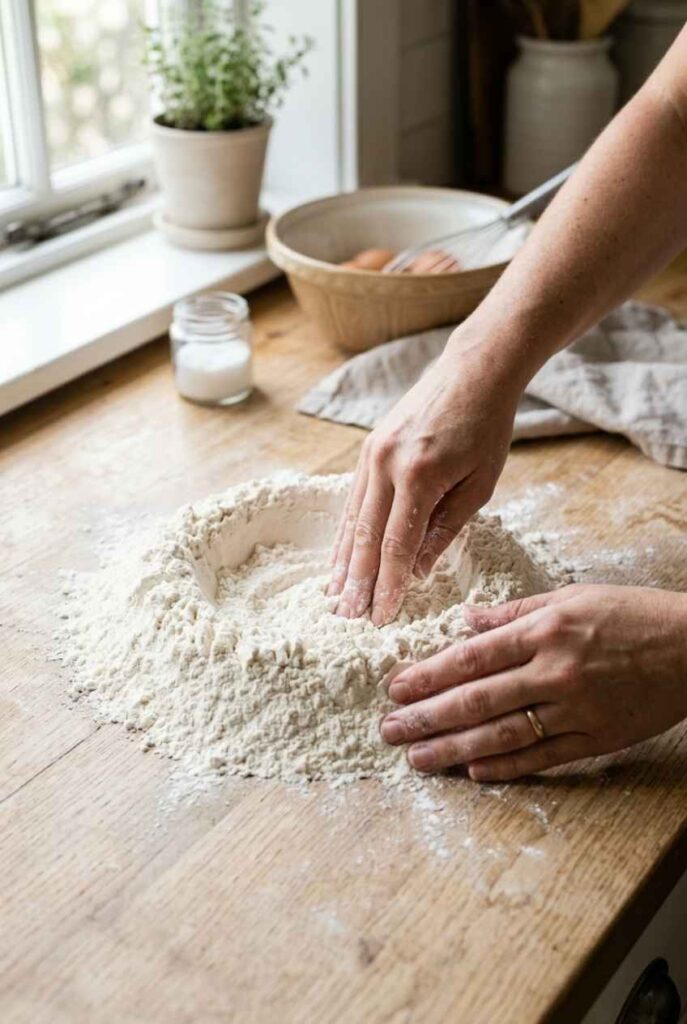
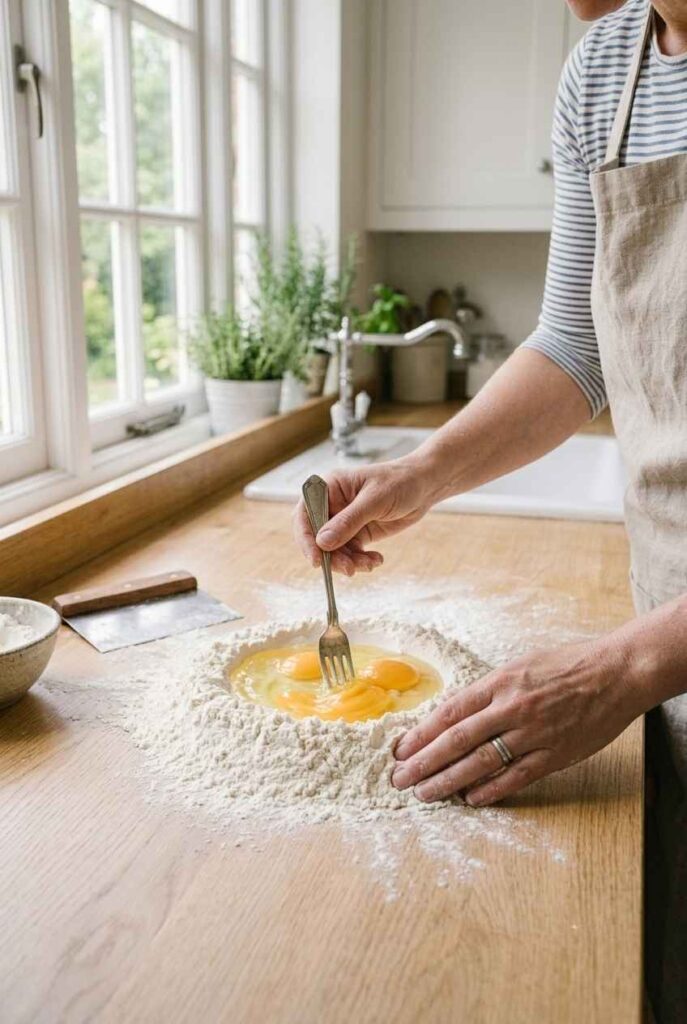
Pour 2 cups of flour directly onto a clean countertop and shape it into a mound, like a small volcano. Use your fist or the back of a spoon to press a wide, deep well into the center, wide enough to hold three eggs comfortably. The walls need to stay thick enough that they don’t collapse the moment liquid touches them, so don’t make the well too narrow.
Step 2: Crack the Eggs Into the Well
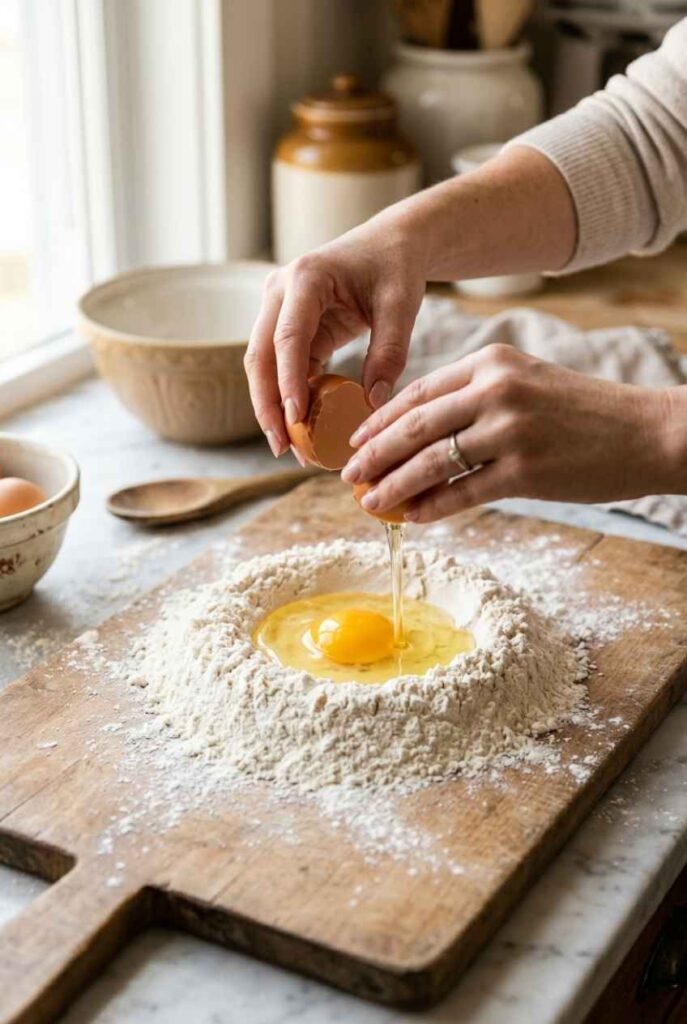
Crack 3 large eggs directly into the center of the well, along with a pinch of salt. Room-temperature eggs blend into the flour more evenly than cold ones straight from the fridge, so pull them out ahead of time if you remember. A stray bit of shell here is easy to fish out now and nearly impossible to find once everything’s mixed.
Step 3: Whisk the Eggs Without Breaking the Wall
Small, contained circles work better than big sweeping strokes here. Using a fork, whisk the eggs inside the well, keeping the motion centered rather than wide. The flour walls are doing an important job right now, holding the liquid in place while it slowly pulls in flour from the inner edges.
Step 4: Bring the Dough Together With a Fork
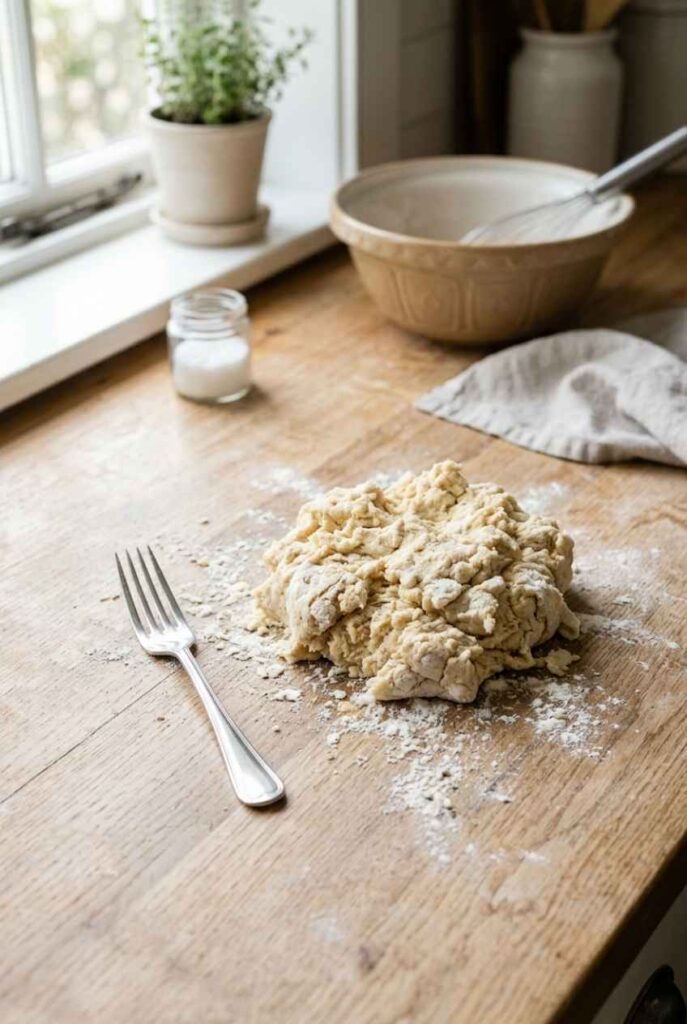
Ten seconds too early and the mixture is still soupy in the middle. Once it thickens past a runny batter texture, switch from whisking to stirring with the fork’s tines, gradually pulling flour in from the inner wall until a shaggy, clumpy dough forms.
Step 5: Knead the Dough for 8-10 Minutes Until Smooth
Dough that looks rough and uneven right now is completely normal. Press the heel of your hand into it, fold it over, and turn it a quarter turn, repeating this motion for 8 to 10 minutes until the surface turns smooth and slightly tacky rather than sticky.
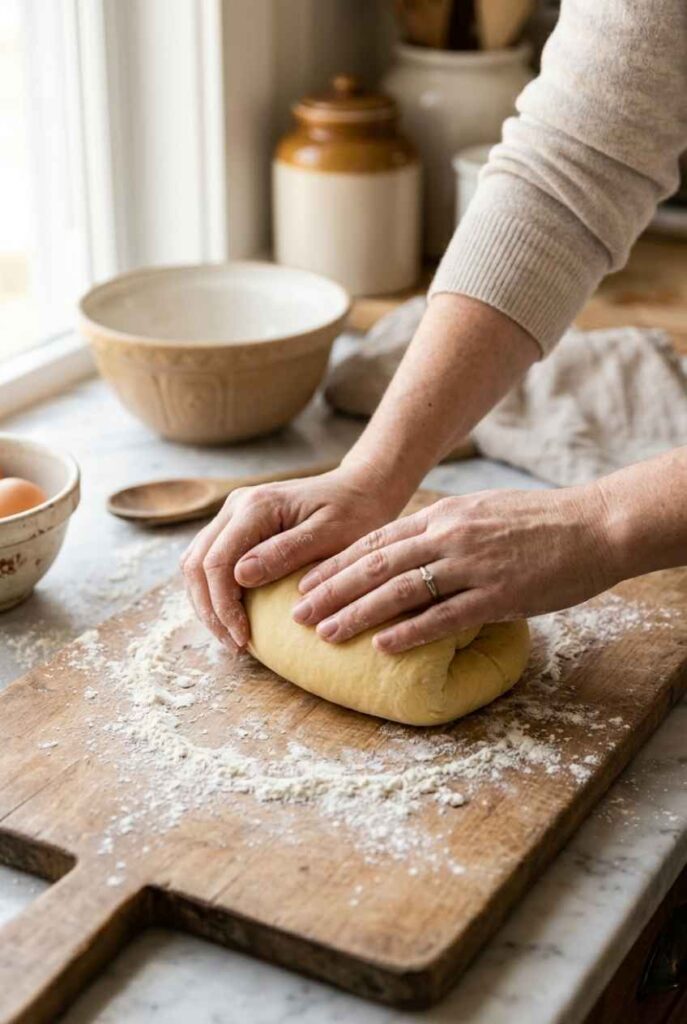
Flour your hands lightly if the dough sticks, but resist over-flouring. Too much extra flour worked in now makes the dough tough instead of tender.
Step 6: Rest the Dough for 30 Minutes Before Rolling
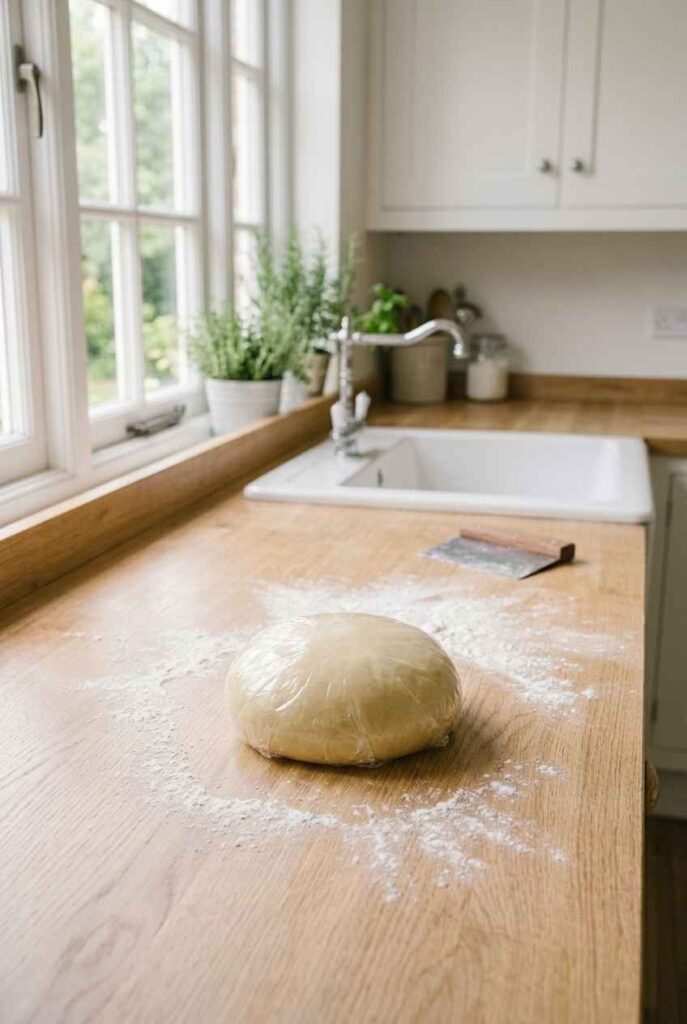
Skipping this step is why homemade pasta sometimes turns out tough and springs back every time you try to roll it. Wrap the kneaded dough tightly in plastic wrap, or cover it with an upside-down bowl, and let it sit at room temperature for 30 minutes so the gluten has time to relax.
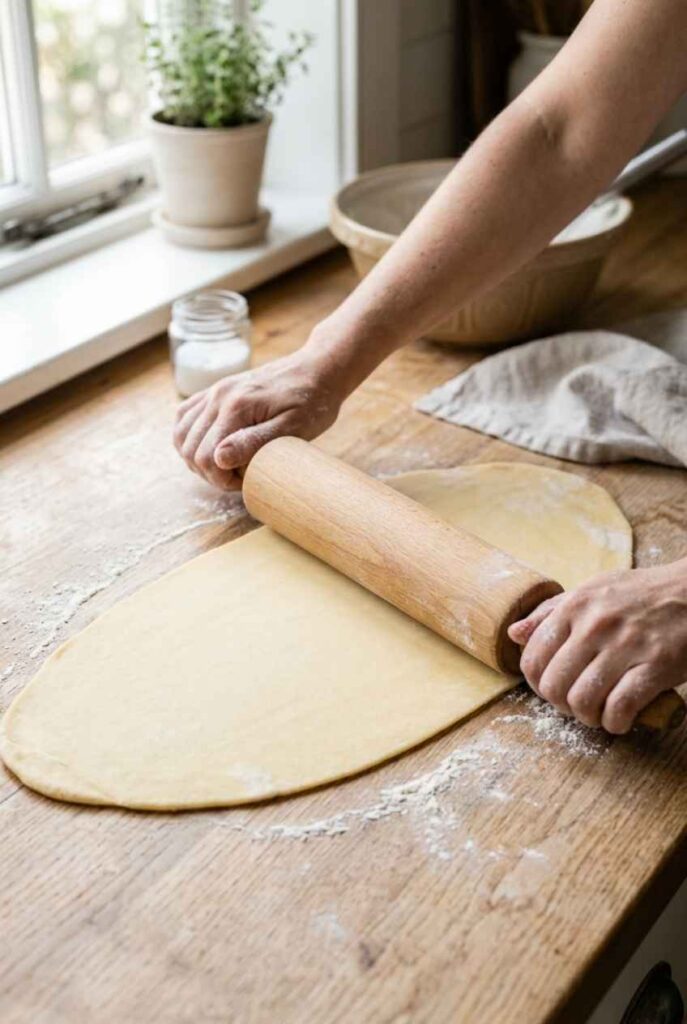
Step 7: Roll the Dough Out Thin With a Rolling Pin
Cut the rested dough into four smaller pieces before rolling, keeping the rest covered so it doesn’t dry out. Roll each piece out on a lightly floured surface until it’s thin enough to see the shadow of your hand through it, about 1/16 of an inch.
Step 8: Cut the Dough Into Noodles
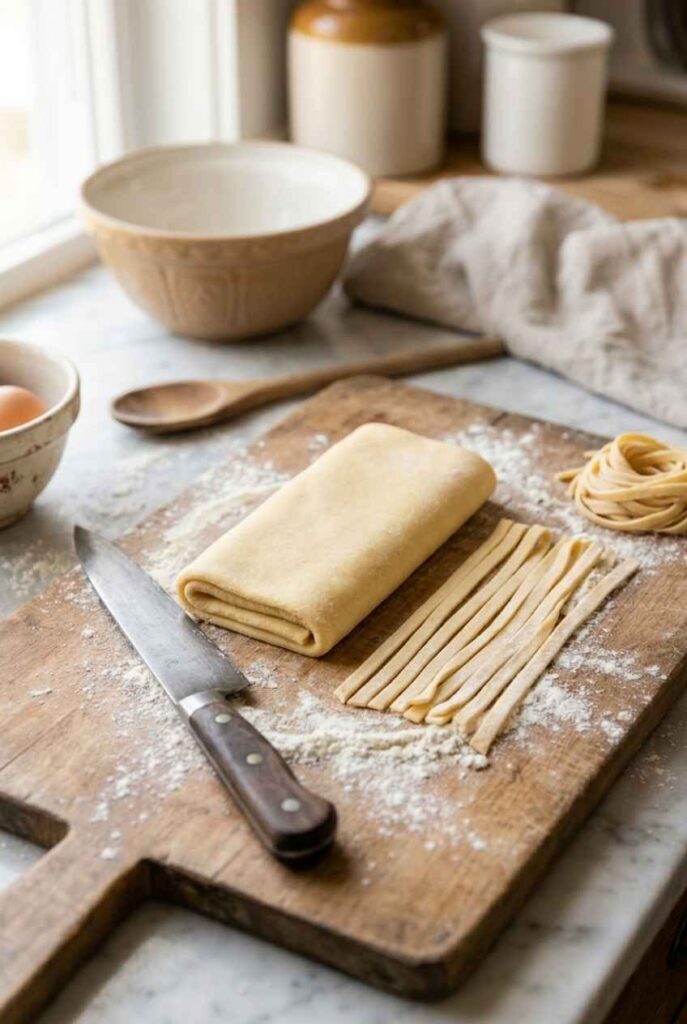
If the sheet feels tacky at all, dust both sides lightly with flour before cutting. Fold the rolled sheet loosely like a fan, then slice across it with a sharp knife into strips as wide as you’d like your noodles, anywhere from 1/8 inch for thin noodles to 1/2 inch for wider ones.
Step 9: Toss the Cut Noodles in Flour to Prevent Sticking
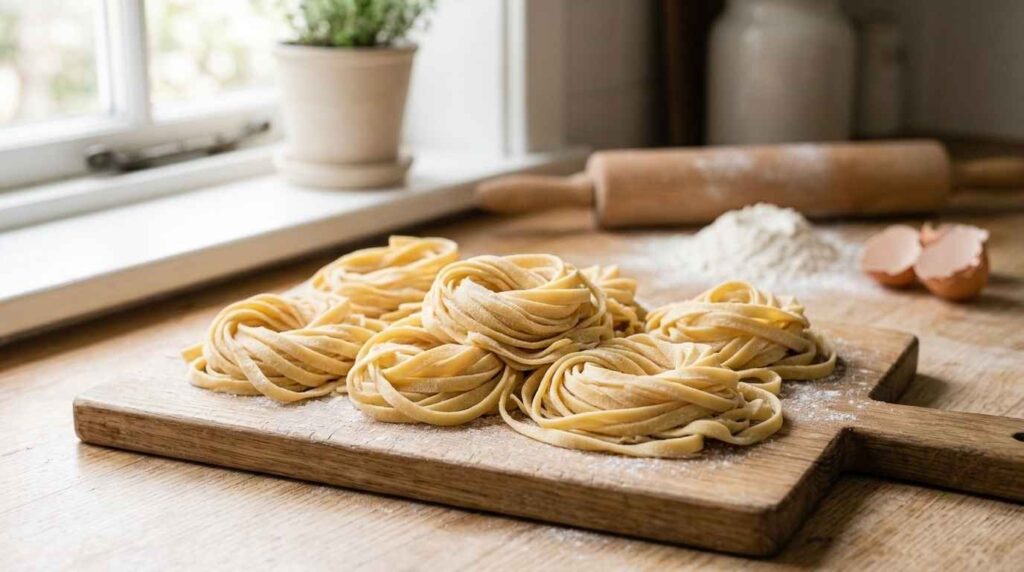
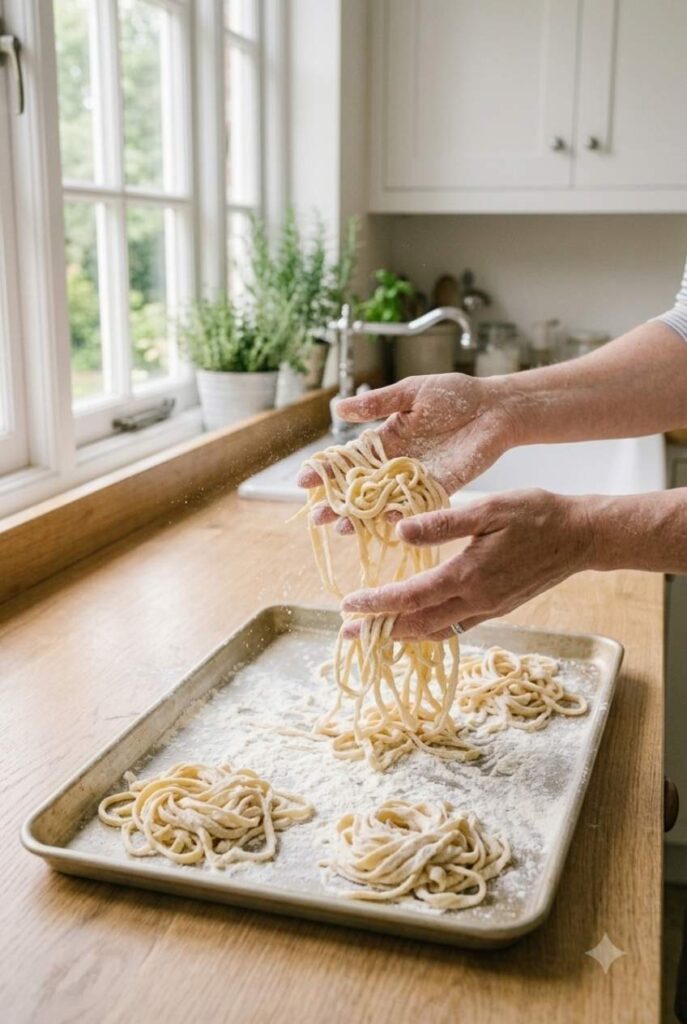
Fresh noodles left in a pile will fuse together within minutes, turning into one solid sheet instead of individual strands. Right after cutting, unfold each strip and toss the noodles loosely in a small handful of flour, then arrange them in loose nests on a baking sheet until you’re ready to cook.
Step 10: Cook the Fresh Pasta in Boiling Water for 2-3 Minutes
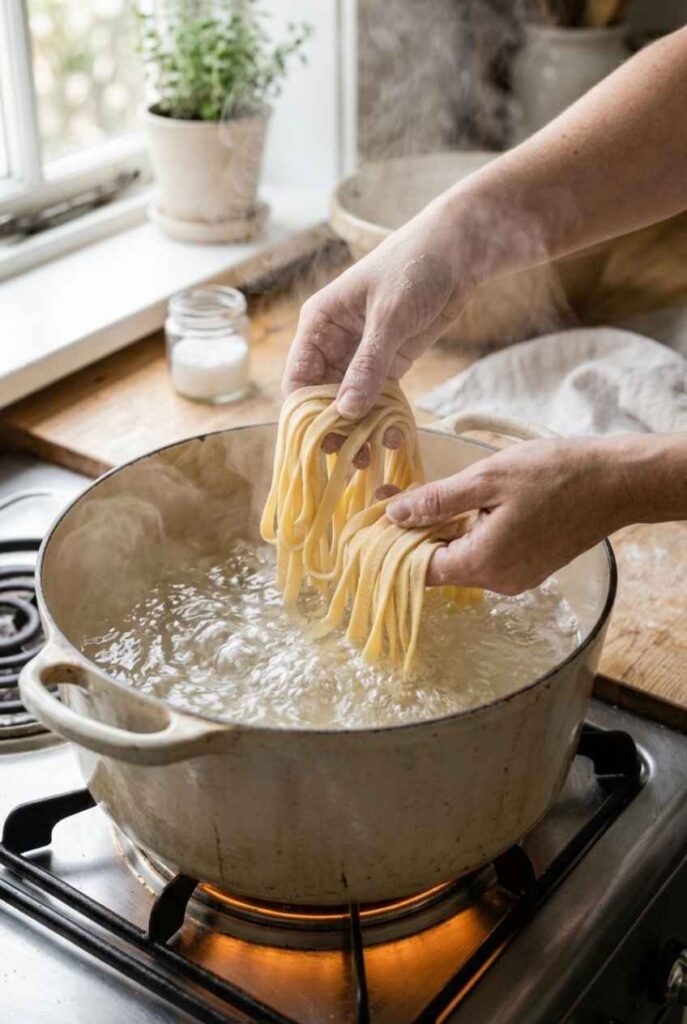
Two minutes is often all it takes, since fresh pasta cooks dramatically faster than the dried box kind. Drop the noodles into a large pot of well-salted, rapidly boiling water and cook for 2 to 3 minutes, until they float to the surface and taste tender rather than doughy. Drain immediately and toss with sauce right away.
Conclusion
A pile of flour and three eggs just became real, homemade pasta, and now you know exactly how the process works from start to finish. That silky texture and quick 2-minute cook time are things dried pasta can’t touch.
Next time, try tossing your fresh noodles with brown butter and sage, or a simple garlic and olive oil sauce that won’t compete with the pasta itself.
Save this how to make pasta at home guide now so it’s ready the next time you want to skip the pasta aisle entirely.